Last updated November 21, 2026
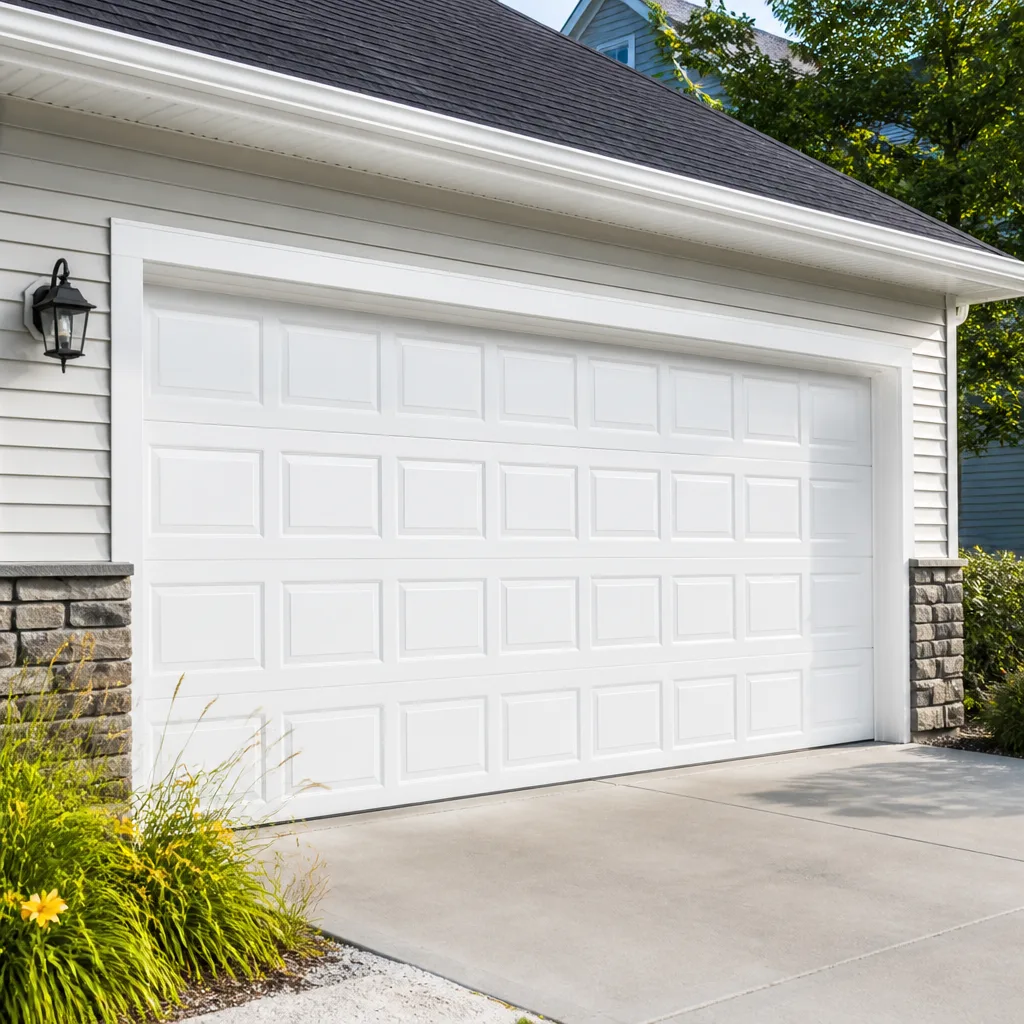 Raised-panel steel
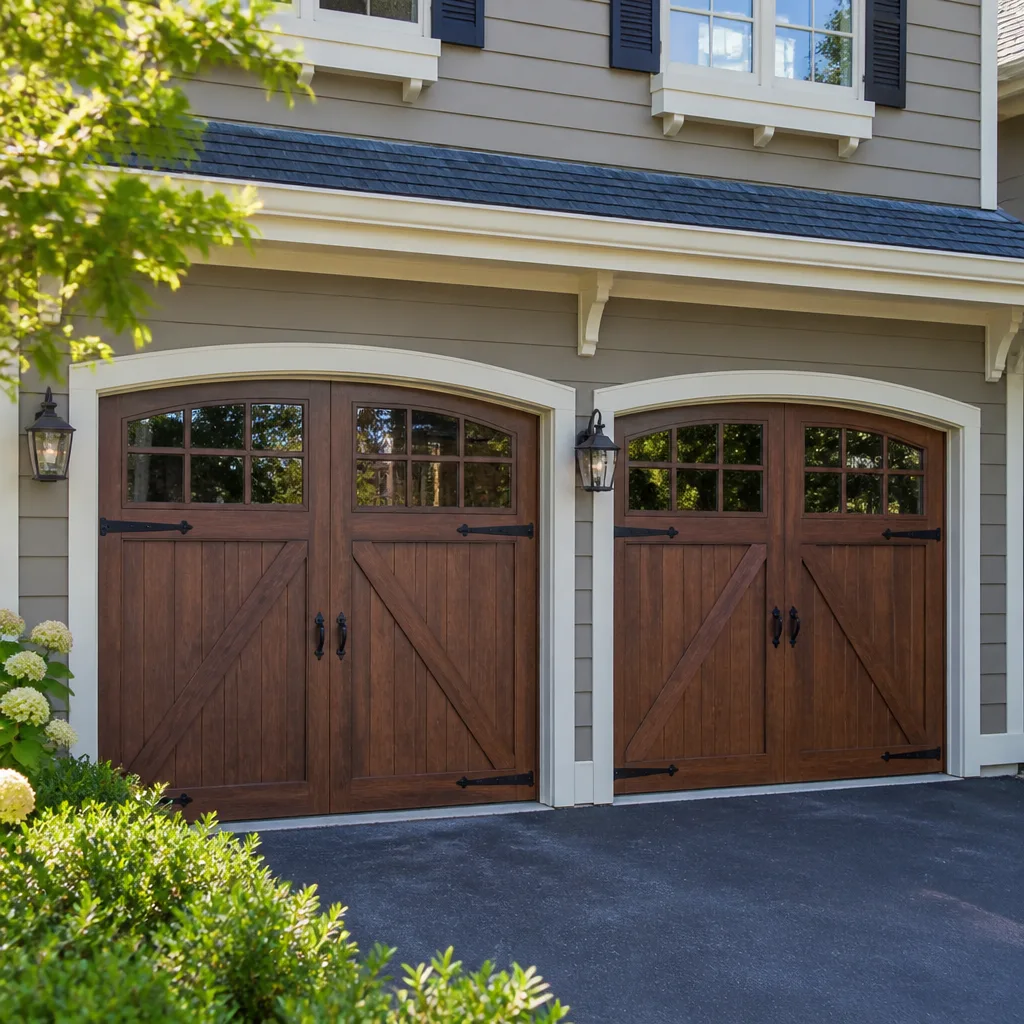 Carriage house
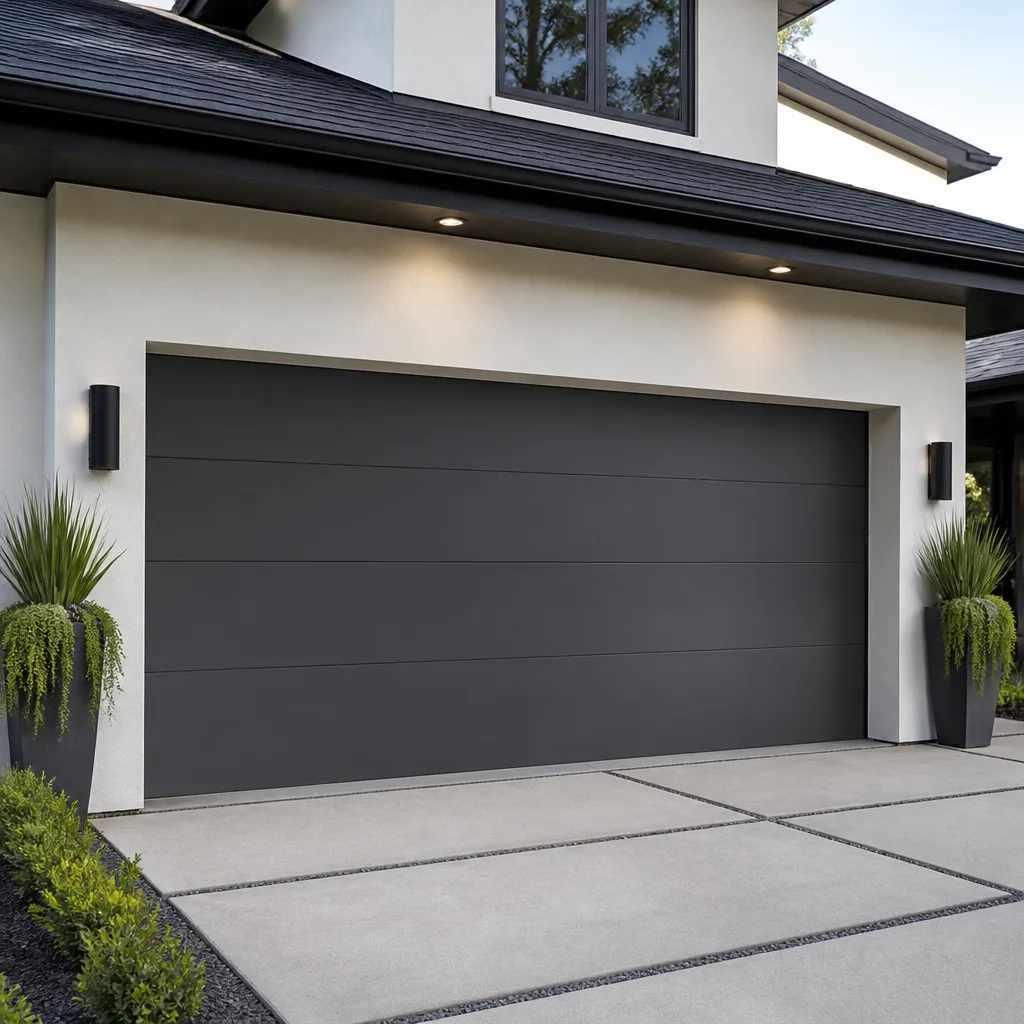 Modern flush
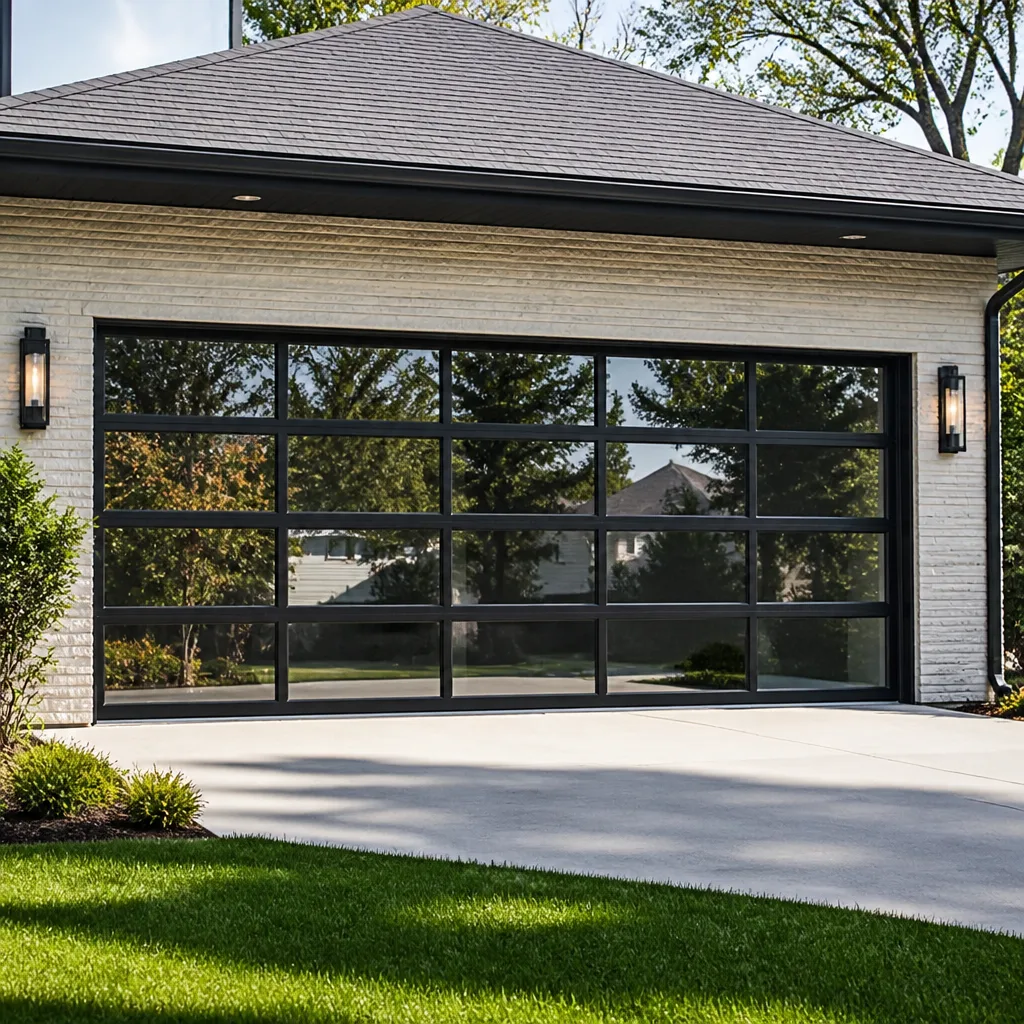 Full-view glass
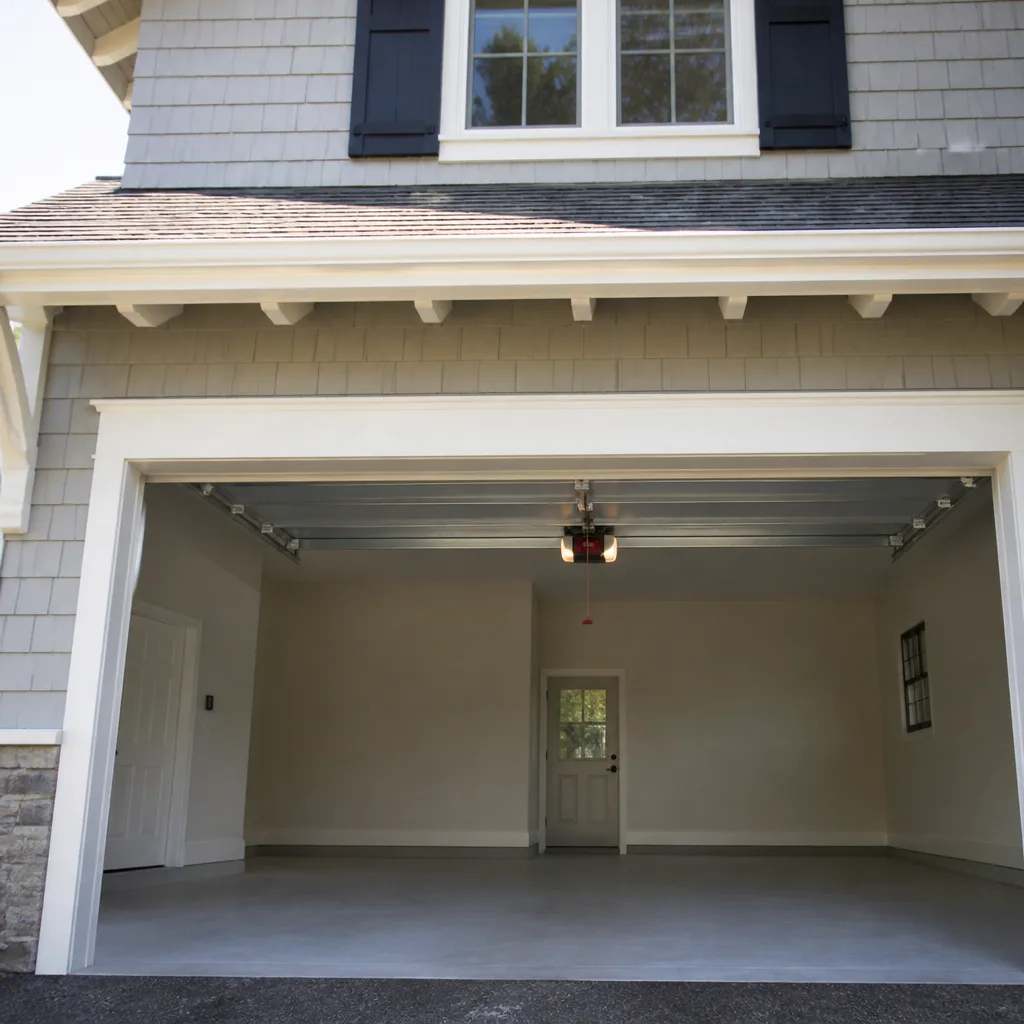 LiftMaster openers
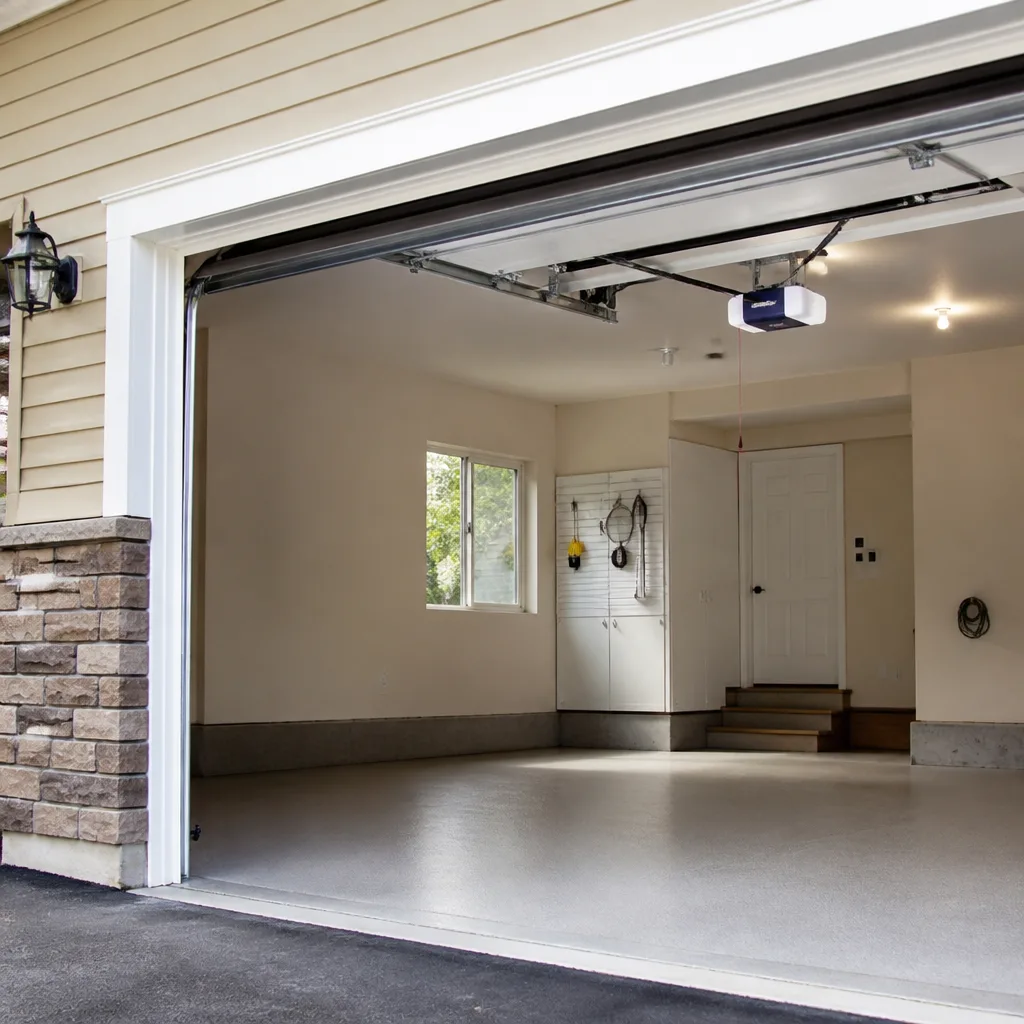 Chamberlain openers
Full 25-point door and opener safety check with every visit - springs, cables, rollers, tracks, and your LiftMaster or Chamberlain opener included
You get a price before we start. It does not change when the pro arrives.
Get your free estimateThe Complete Guide to Garage Doors in Parma
Most garage door advice online is written for Phoenix or Atlanta, where the biggest threat to a door is sun fade and a dry hinge. Parma doesn’t live in that world. Here, the door on your cape cod or brick colonial takes lake-effect snow, a freeze-thaw cycle that runs from November into March, and road salt splashing the bottom panel every time you pull in. Those conditions change which materials hold up, which springs fail early, which opener drive type survives, and whether repair or replacement is the smarter spend. This guide maps each decision to what actually works on a Parma street, so you can walk into any conversation with a technician already knowing what you need and why.
Quick Answer
For most Parma homeowners, the right garage door decision comes down to three things: the age and material of the current door, the specific damage (seals, springs, panels, or opener), and how well the door insulates the attached garage from Northeast Ohio winters. A steel door under about 15 years old with a failed spring or seal is almost always worth repairing; a battered door with cracked panels and a tired opener usually costs less over time to replace. The written estimate always settles the final price, so get one before approving any work.
Styles & brands we work with
- Raised-panel steel
- Carriage house
- Modern flush
- Full-view glass
- LiftMaster openers
- Chamberlain openers
Table of Contents
- How Parma’s Freeze-Thaw Cycle Wears Out Your Door
- Insulation and R-Value in Parma’s Pre-1980 Attached Garages
- Repair vs. Replace: A Decision Map for Parma Homes
- Which Opener Drive Type Survives Northeast Ohio Temperature Swings
- Matching Door Style to Parma’s Architecture
- Springs: The Most Dangerous Part of Your Door
- What a Typical Service Visit Looks Like
- What Garage Door Work Costs in Parma
How Parma’s Freeze-Thaw Cycle Wears Out Your Door
Northeast Ohio doesn’t just get cold. It gets cold, thaws, refreezes, and does it again dozens of times each winter. That cycle is harder on garage doors than a steady deep freeze, because every thaw lets moisture creep into seams and gaps, and every refreeze expands it. The parts that suffer first are predictable.
- Bottom seals. The rubber or vinyl seal along the bottom of the door is the first line of defense against snow, slush, and road spray. Repeated freezing stiffens the material, and a stiff seal cracks instead of flexing. Once it’s cracked, meltwater gets under the door and freezes to the floor, and you’re chipping ice off the threshold all winter.
- Springs. Steel springs don’t care about temperature the way people think, but the cycles do. Every open and close is one cycle, and a freeze-thaw winter means more of them, with more strain on a cold, contracted spring. Cold metal is less forgiving, and a worn spring that survived a mild season can let go on the first hard cold snap.
- Steel panels. Moisture trapped against painted steel is where rust starts. On Parma homes, it usually begins at the bottom panel, where slush and salt sit longest, and along seams where paint has chipped. A small rust spot in October becomes a bubbling, flaking section by spring.
What this means for you: inspect the bottom seal and the bottom panel every fall, before the first freeze. If the seal is stiff or cracked, replace it then, not in January when water is already getting in. And if you hear a bang from the garage, treat it as a spring, not a fluke. For a full breakdown of the repair itself, see our page on garage door repair.
Insulation and R-Value in Parma’s Pre-1980 Attached Garages
The standard insulation advice you’ll read online assumes a modern, tightly built house. Much of Parma’s housing stock doesn’t fit that. The dominant attached-garage layouts here are older, and the wall between the garage and the living space is often thinner and less sealed than what a new build would have. That changes what insulation is actually doing for you.
Here’s the part general guides miss. For an attached garage in a Parma home, the door isn’t the insulation story on its own. The door controls how much cold air reaches the garage, but the real question is how much of that cold leaks through the shared wall into the kitchen or the room above. An insulated door helps. It won’t fix a wall with gaps around outlets and framing.
So how should you think about R-value? Two practical rules:
- If the garage shares a wall with living space, insulation is worth it. An insulated door keeps the garage from acting as a cold sink against that wall. On older Parma homes this is often the single most noticeable comfort improvement, especially in rooms above the garage.
- If the garage is detached or fully separated, don’t overspend for insulation. A basic insulated door is fine. Paying for the highest R-value on a detached, unheated garage is money that never comes back to you in comfort.
R-values advertised on doors are measured under controlled conditions. Real-world performance depends on the seal, the threshold, and how well the door fits its opening. A well-sealed basic door beats a high-R-value door with a worn bottom seal every time. When you’re ready to look at options, our garage door installation page covers the material and insulation choices in detail.
Repair vs. Replace: A Decision Map for Parma Homes
This is the question we get most: should I fix it or replace it? The honest answer depends on age, material, and what’s broken. Here’s how to work through it for a Parma house.
Age and material
- Wood doors: Beautiful on a brick colonial, but wood and Northeast Ohio freeze-thaw don’t get along unless it’s maintained. If a wood door has soft spots, rot at the bottom rail, or peeling paint you can’t keep up with, replacement in steel or a composite is usually the better long-term call.
- Steel doors: The workhorse on Parma ranches and capes. Steel under about 15 years old with surface rust at the bottom is a repair candidate if the rust hasn’t gone through. Perforated or bubbling rust across panels means replacement.
- Aluminum and older single-panel doors: Common on mid-century homes. Dents are hard to fix cosmetically, and these often have tired hardware and openers. If the door is dented and the opener is original, replacing both together is often the cleaner spend than patching one then the other.
Damage type
- Broken spring or cable: Repair. The door itself is fine. This is mechanical, not structural.
- Opener not responding: Repair, unless the opener is very old and parts are hard to source. Our garage door opener repair team handles the common brands.
- Bent or cracked bottom panel: Repair if the panel is replaceable for that model, replace the whole door if it isn’t. Older models often fall into the second bucket.
- Sagging or twisted door: Usually a structural problem with the track or framing. Get it looked at before you assume it’s just the opener.
One thing to know before you decide: a door replacement is measured, ordered, and scheduled, not done on the spot. Repairs can often be handled quickly. That timing difference matters if you have a car trapped or a house left open.
Which Opener Drive Type Survives Northeast Ohio Temperature Swings
The three drive types you’ll see are belt, chain, and screw. Each behaves differently when the temperature drops and the door gets heavier, and that’s exactly when a weak opener shows its faults.
- Belt drive: Quiet and smooth, and it handles cold better than chain because the belt absorbs shock instead of transferring it. Best choice for an attached garage under or next to a bedroom. It’s the type we’d point most Parma homeowners toward when noise matters.
- Chain drive: Durable and the most common drive on older installations. It gets louder in cold weather and can rattle a cold steel door, but it’s reliable and repairable. If your chain opener is older and noisy, that’s not necessarily a failure, but it’s a sign to check the door’s balance before winter.
- Screw drive: Fewest moving parts and quiet, but more expensive up front and less common locally. A reasonable choice, but not the first one we’d recommend unless you specifically want it.
Whatever the drive type, the opener isn’t doing all the lifting. The springs carry the door’s weight, and the opener just guides it. A struggling opener is often a spring problem in disguise. That’s why we look at the whole system before quoting. If your setup runs a LiftMaster, Chamberlain, or Genie unit, a technician will already know the system before arriving, and that shortens the diagnostic visit.
For a larger house or a two-car door, check the opener’s duty rating, not just the drive type. A light-duty unit on a heavy insulated door is a mismatch that shows up as strain in cold weather.
Matching Door Style to Parma’s Architecture
A garage door is a big, flat, visible surface. Get the style wrong and the house looks off, even if the door is perfectly good. Parma’s housing stock is dominated by a few recognizable types, and each points to a different door style.
- Cape cods: Compact, steep-roofed, often with a single or small double door. Panel styles with simple raised or recessed panels read best. Don’t overload a small facade with heavy decorative hardware or windows. Simplicity fits the proportions.
- Ranches: Low and wide, usually a two-car door facing the street. Long horizontal panels and short panels in a stack work well. A carriage-style door can look great here if the rest of the house has a clean, horizontal line.
- Brick colonials: These take a carriage-house or raised-panel look well, and window rows in the top section can echo the house’s own windows. Be careful with color. A door that’s too dark against brick can look heavy; a color that matches the trim is usually safer.
The windows question comes up a lot. Windows in the top section add light and style, but they’re another surface to seal and clean through Parma winters. If you go that route, get a door with insulated glass and a well-built section joint, and plan to check the seals each fall.
Brand familiarity matters here too. Clopay, Amarr, Wayne Dalton, and Raynor all make doors in the styles that fit Parma homes, and a technician who knows those lines can tell you quickly which one matches your opening and your house without a second visit.
Springs: The Most Dangerous Part of Your Door
Garage door springs are under high tension. They carry the door’s weight so the opener doesn’t have to, and when they fail, they can release that tension suddenly. This is the one part of a garage door we never suggest a homeowner work on. Springs and the cables attached to them are genuinely dangerous, and a mistake can cause serious injury. Leave this to a trained technician.
Two spring types matter for Parma homes: torsion and extension. Torsion springs mount above the door on a shaft; extension springs run along the sides. Both wear out by cycle count, and Parma’s long winters add cycles. A few things to know:
- Don’t ignore a bang. If you hear a loud snap and the door won’t open, a spring has likely broken. Don’t keep hitting the opener, which strains the motor and can send the door off track.
- Don’t try to lift a door with a broken spring by hand. It’s far heavier than it looks, and it can come down on you.
- Have both springs looked at together. Springs are often installed in matched pairs and wear at the same rate. If one went, the other is usually close, so the pair is commonly replaced together. A pair costs about twice a single spring, and the written estimate will spell it out.
Our separate spring repair service is exactly this: hands-on mechanical work from a technician who does it often. When you get an estimate, ask whether it covers one spring or a pair, so there are no surprises.
What a Typical Service Visit Looks Like
Every situation is different, but many calls follow a similar pattern. Knowing what to expect helps you decide faster.
- Describe the problem when you call. Door won’t open? Noisy? Opener dead? The more you can say, the better the technician can prepare.
- Get a written estimate. The price is quoted and agreed before any work starts. That’s the number that matters, and it’s what the written estimate sets.
- The technician diagnoses on site. Springs, cables, rollers, track, opener. A good visit checks the whole system, not just the part you noticed.
- Repair or order parts. Repairs can often happen the same visit; a door replacement is measured, ordered, and scheduled.
- Test and adjust. The door gets balanced and tested so it opens and closes cleanly.
Emergency calls work differently. If a door is stuck open or won’t open at all, emergency service is a real option rather than an upgrade, and that matters when the garage is the way into the house or the car is trapped. We can’t promise a specific response time, but it’s worth the call.
For the full range of what we handle, visit Parma Garage Door Repair Co. One company covers spring, opener, panel, and full door, so you don’t need a second call whatever the diagnosis turns out to be.
What Garage Door Work Costs in Parma
Pricing is per job by estimate, and the written estimate is the final price. That said, homeowners want to know roughly what they’re facing before they call, so here’s a guide to typical ranges. Use these to budget, not to settle on a final number.
- Spring repair: $180 – $340 for one spring, installed.
- Matched spring pair: About twice the single-spring figure, since the pair is usually replaced together.
- Opener repair: $125 – $275, depending on the part and the brand.
- Bottom seal replacement: $90 – $180.
- Panel replacement: $150 – $450, depending on the model and whether the panel is still available.
- New door installation: $1,200 – $3,500, depending on size, material, and insulation.
These are typical ranges for work in this area, not a quote. The written estimate you get before work starts is the number that applies. If you want a firm number, estimates are free.
Common Mistakes to Avoid
- Ignoring the bottom seal before winter. A stiff, cracked seal lets meltwater in and freezes to the threshold. Replace it in fall, not after the first deep freeze.
- Forcing a door that won’t open. If the opener runs but the door doesn’t move, or you hear clicking without movement, stop. Forcing it strains the motor and can send the door off track.
- Trying to fix a spring yourself. Springs are under high tension and genuinely dangerous. A trained technician handles these, not a homeowner with a ladder.
- Buying the highest R-value for a detached garage. In an unheated, detached garage, that extra insulation rarely pays you back in comfort. Match the door to the garage, not to the brochure.
- Replacing a good door over a dead opener. Often the opener or spring is the real problem. Diagnose the whole system before you assume the door is done.
- Skipping the balance check. A door that needs a hand to lift is straining the opener every time. That strain shortens the opener’s life, so get the door balanced.
- Choosing a color that fights the house. On a brick colonial in Parma, a door that’s too dark against the brick can look heavy. Match the trim or test a sample before you order.
See the difference
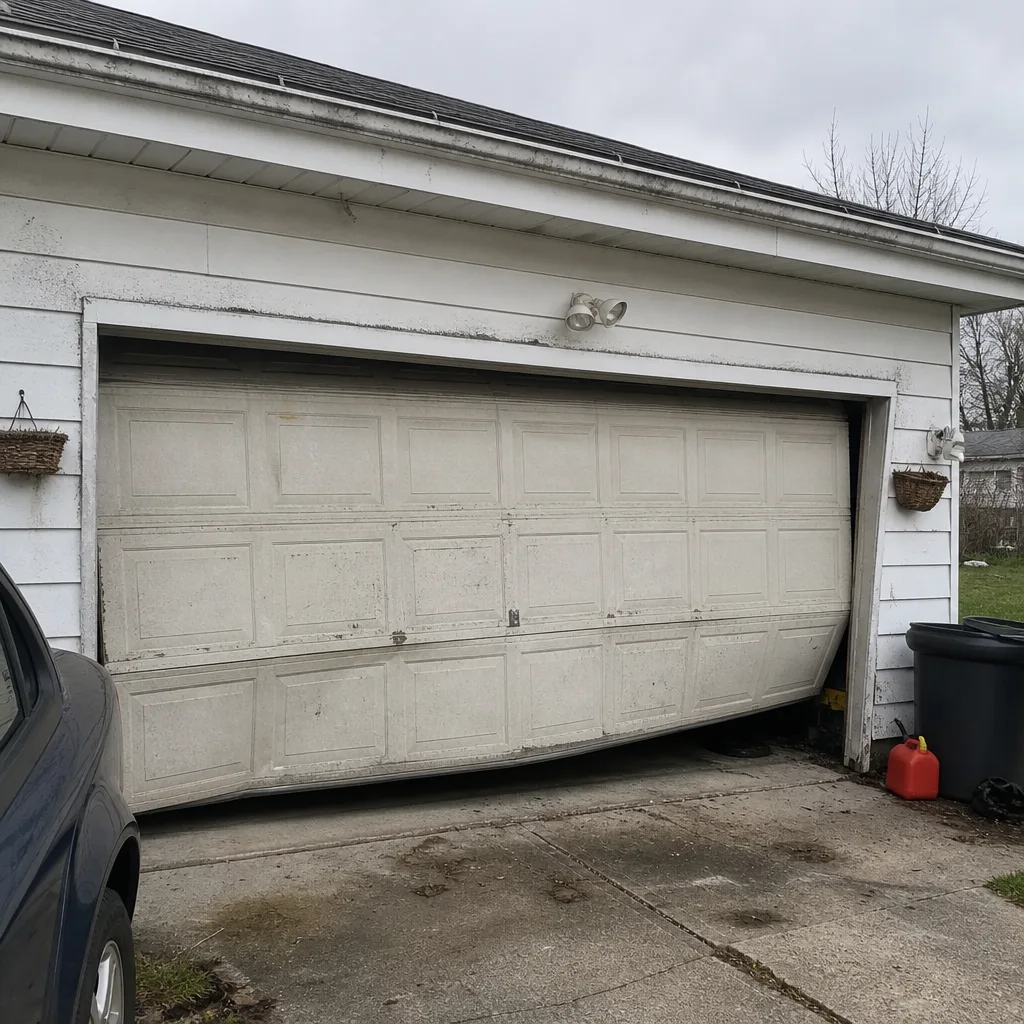 Before
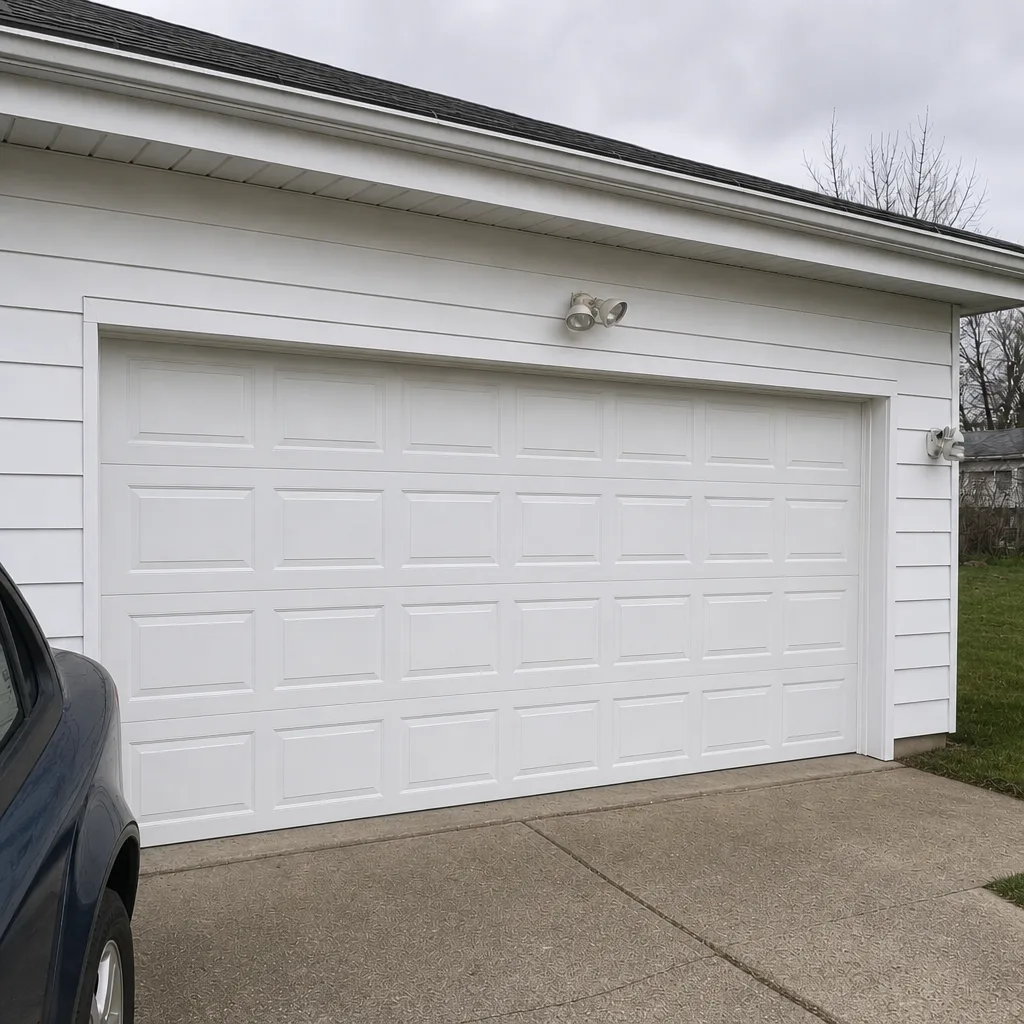 After
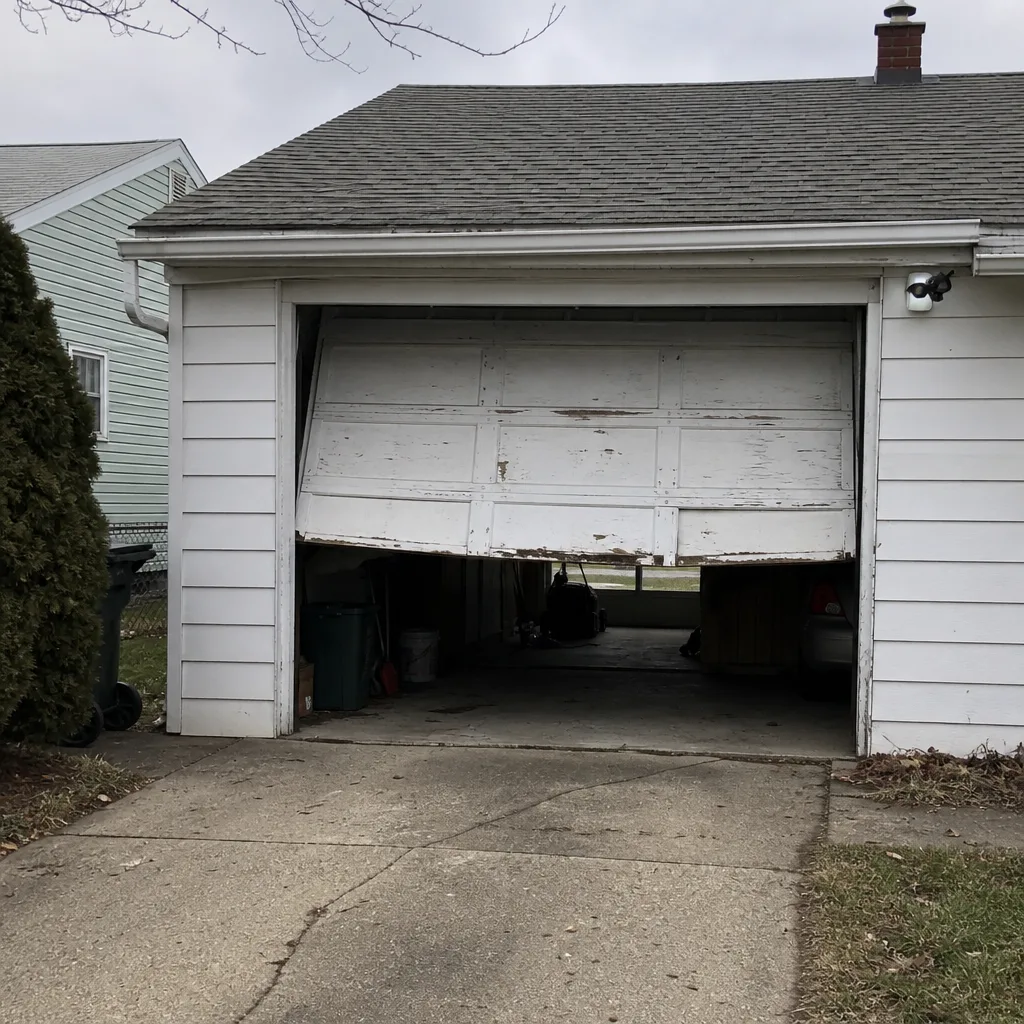 Before
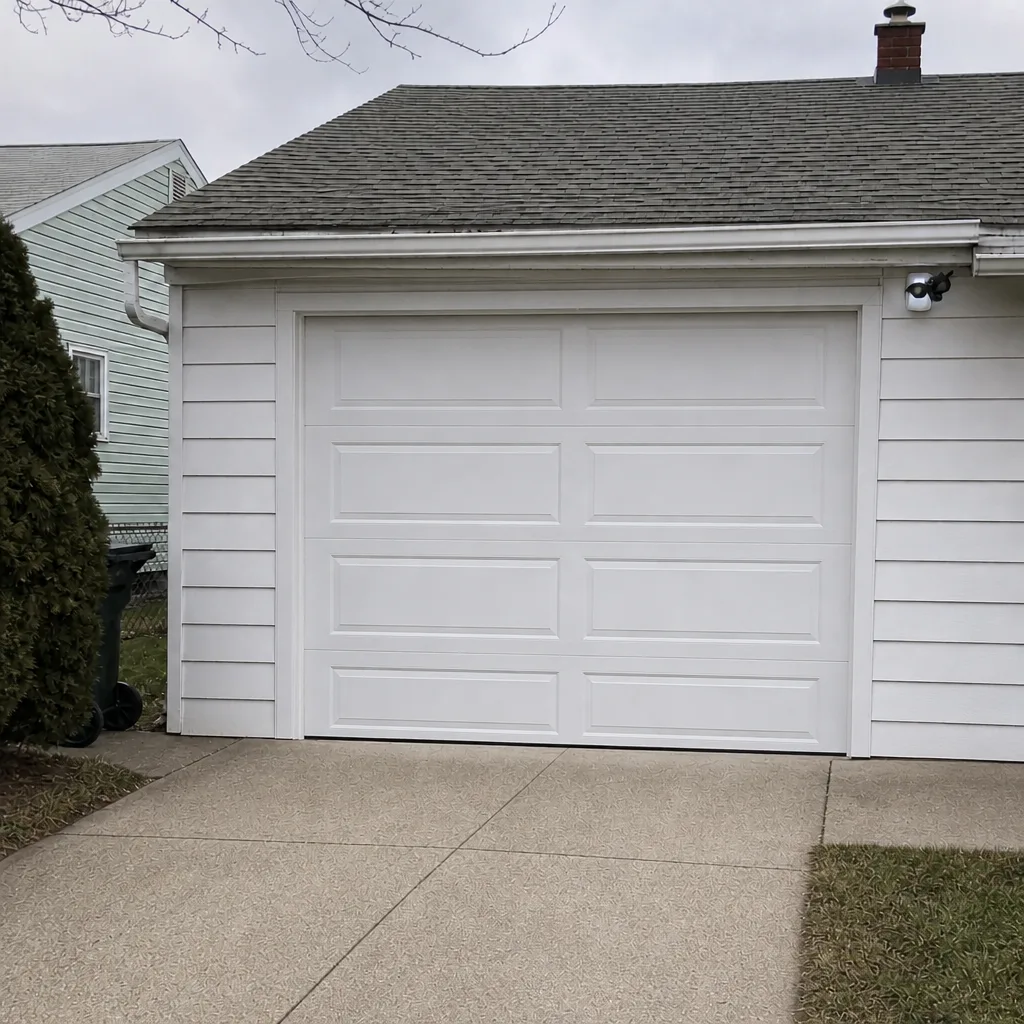 After
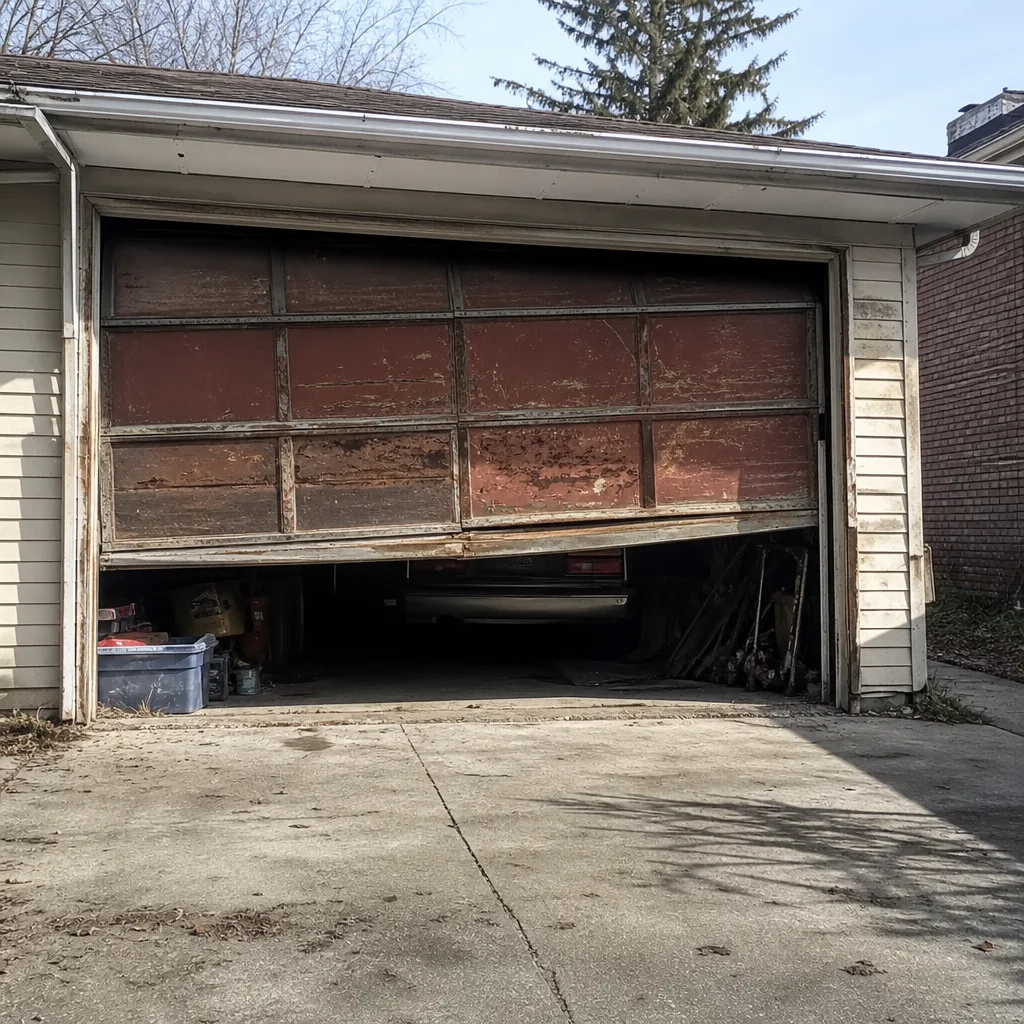 Before
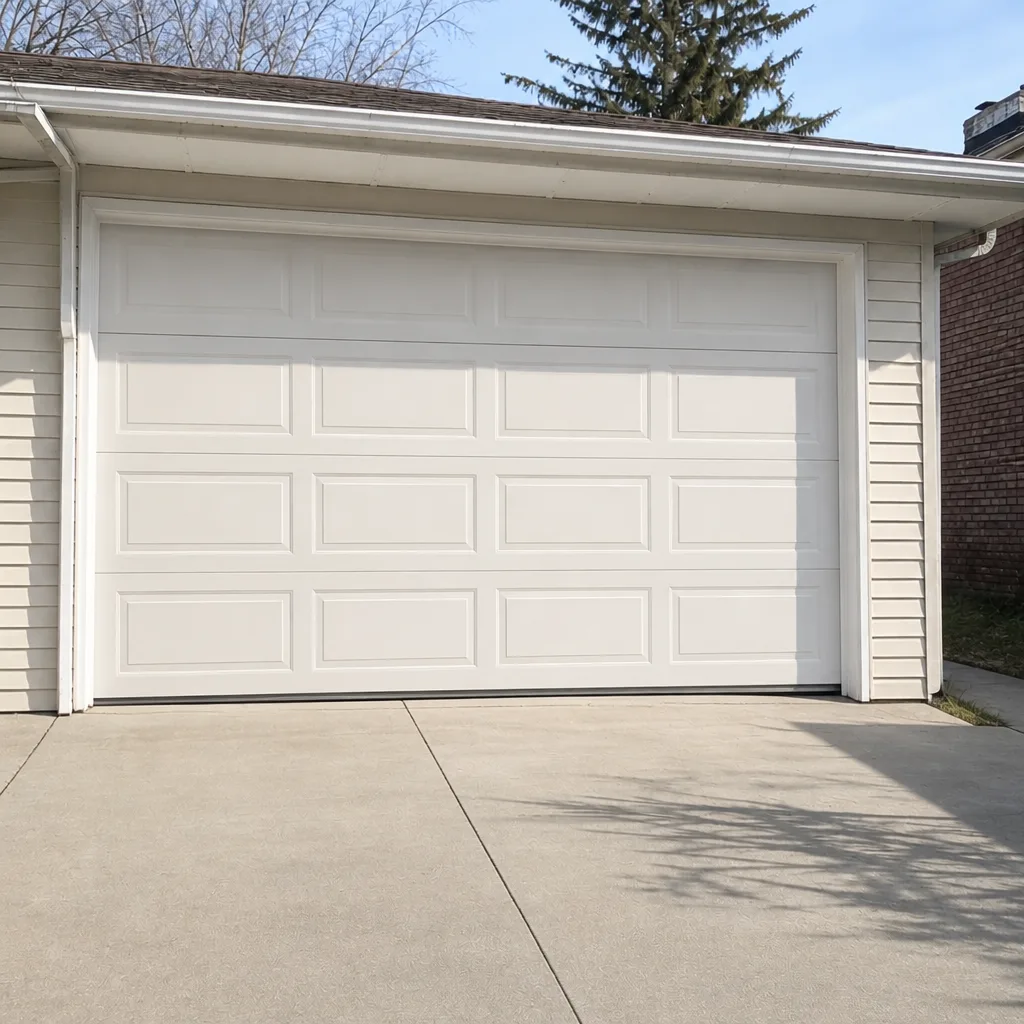 After
When to Call a Professional
Some things are fine to handle yourself: cleaning seals, clearing snow and slush from the threshold, wiping down panels. Others aren’t. Call a professional when:
- A spring has broken or the door won’t open at all.
- The door is unbalanced and needs a hand to lift.
- The opener runs but the door doesn’t move, or moves erratically.
- A panel is bent, cracked, or rusted through.
- The door is off track or sagging on one side.
- You hear unusual banging, grinding, or squealing during operation.
Parma Garage Door Repair Co offers free estimates in Parma. Call (844) 900-3998 and we’ll take a look. Estimates are free, and the written quote is the price you pay.
Frequently Asked Questions
Typically $180 – $340 for one spring, installed, with a matched pair costing about twice that since the pair is commonly replaced together. The written estimate sets the final number, so the figure you agree to is the figure you pay. Call (844) 900-3998 for an exact quote; estimates are free.
Emergency service is available for situations like a door that won’t open or a car trapped inside, and we can often get to it quickly, though we can’t promise a specific timeframe. Repair work can frequently be handled fast; a full door replacement is scheduled, not same-day. Call (844) 900-3998 and we’ll find a time that works.
No. The price is quoted and agreed before any work starts, and that written estimate sets the final price. If we find something the estimate didn’t cover, we’ll talk to you before doing it. Call (844) 900-3998 for a free estimate.
Yes. The local professionals we connect you with are licensed and insured as their state requires, and they’re experienced working on the major brands. Our technicians have up to 8 years of experience. Call (844) 900-3998 with any questions on credentials.
It depends on age, material, and damage. A steel door under about 15 years old with a failed spring or seal is usually worth repairing, while a battered door with cracked panels and a tired opener often costs less to replace over time. Get a written estimate before you decide. Call (844) 900-3998 for a free one.
Very likely. We work on LiftMaster, Chamberlain, Genie, Clopay, Amarr, Wayne Dalton, Craftsman, and Raynor, which covers most residential installations. A technician will know the system before arriving. Call (844) 900-3998 to confirm your setup.
The Bottom Line
Parma’s climate and housing stock make generic garage door advice misleading. The freeze-thaw cycle wears out seals, springs, and bottom panels faster, and the older attached garages here change what insulation is actually worth to you. The right decisions come down to three things: age and material, the specific damage, and how the door fits how you use the garage. Get a written estimate before you approve any work. Parma Garage Door Repair Co handles spring, opener, panel, and full door, so you don’t need a second call. Call (844) 900-3998 for a free estimate today.
Written by the team at Parma Garage Door Repair Co.