Last updated November 21, 2026
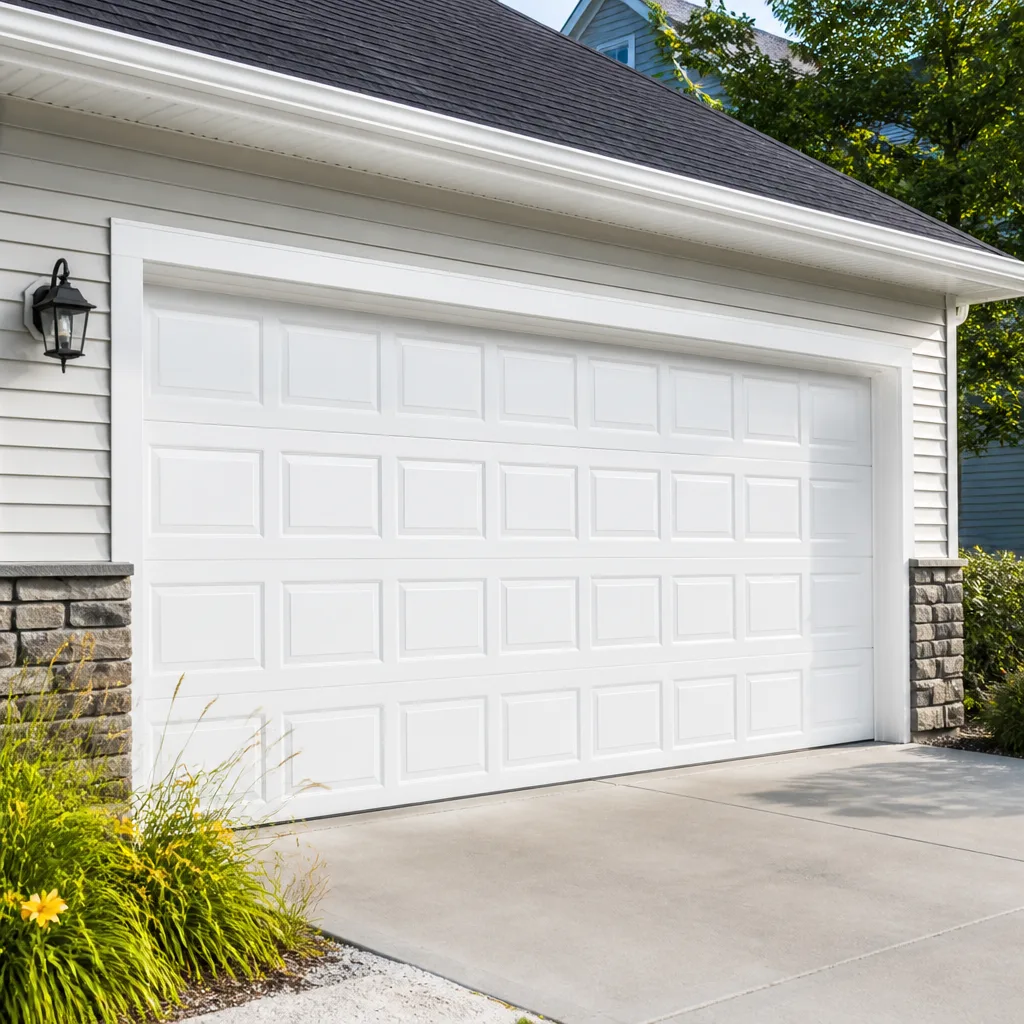 Raised-panel steel
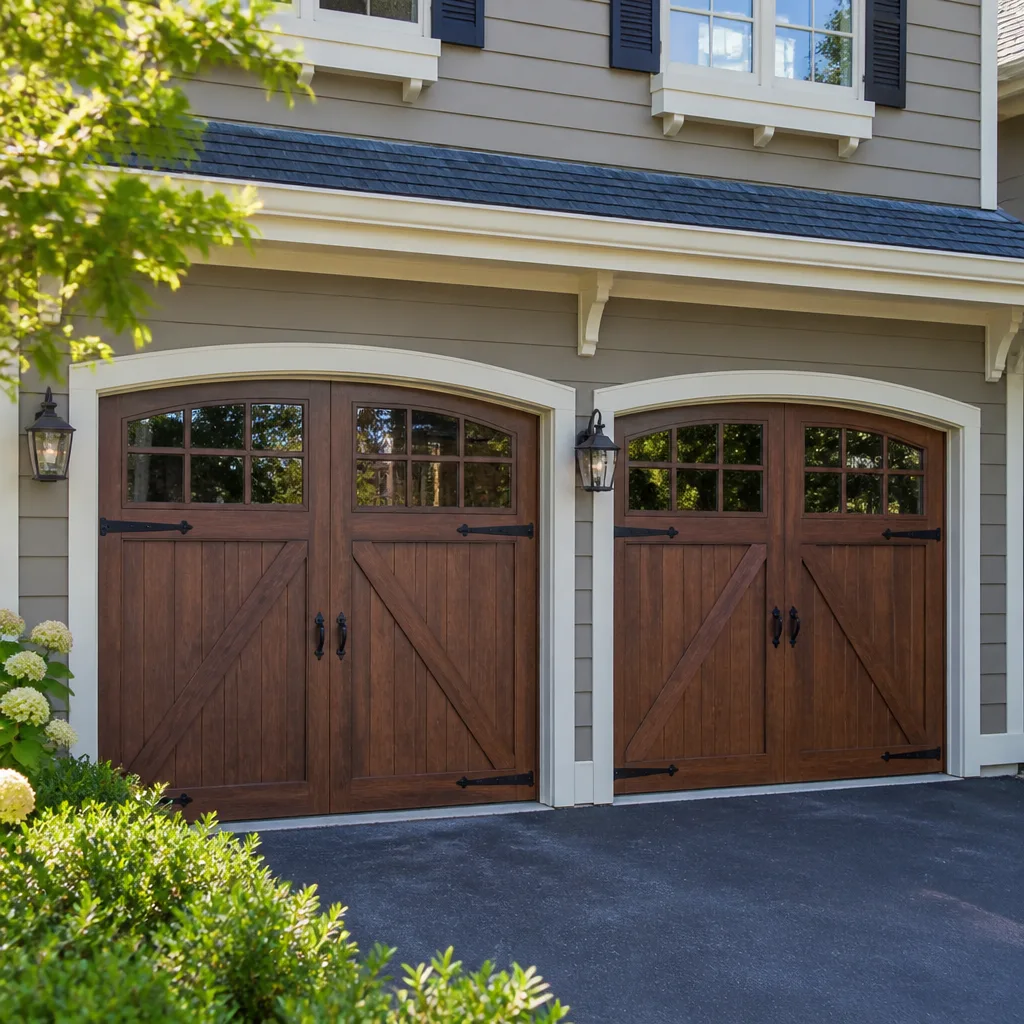 Carriage house
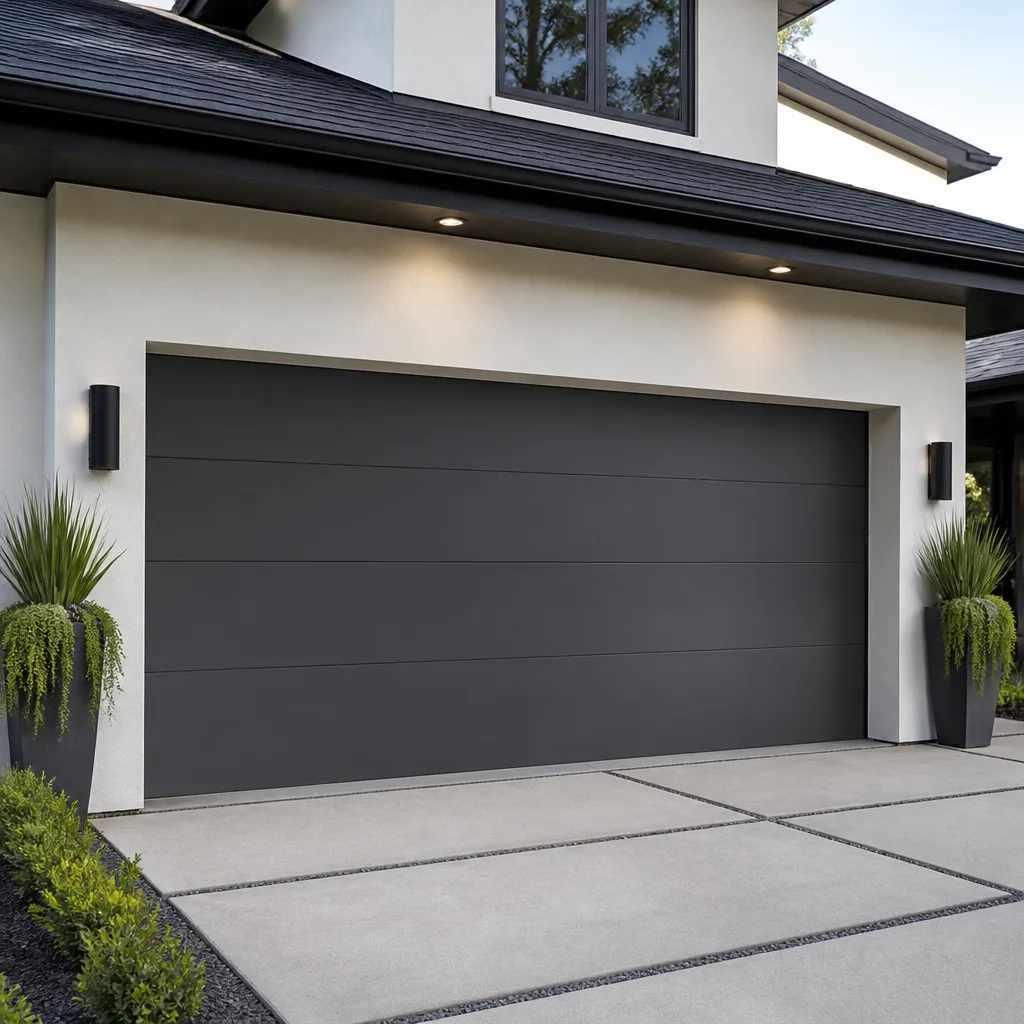 Modern flush
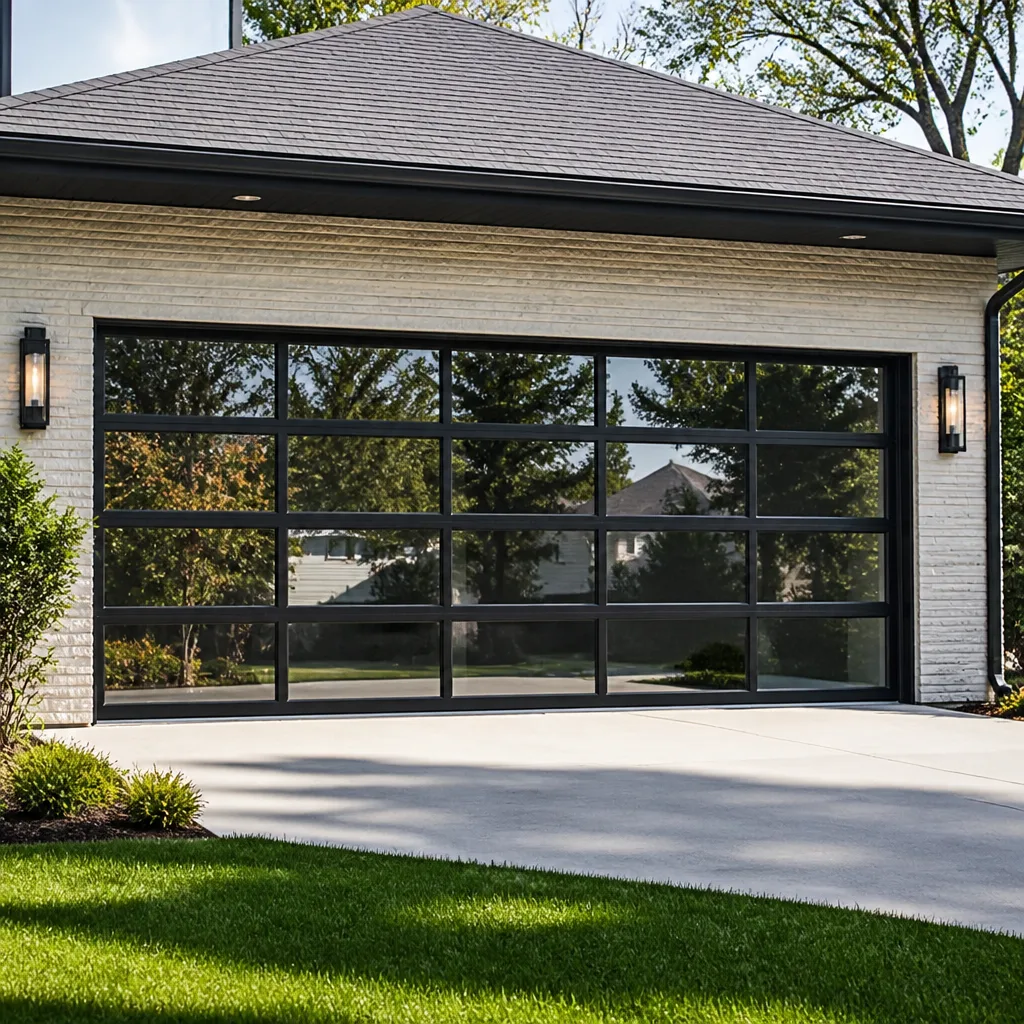 Full-view glass
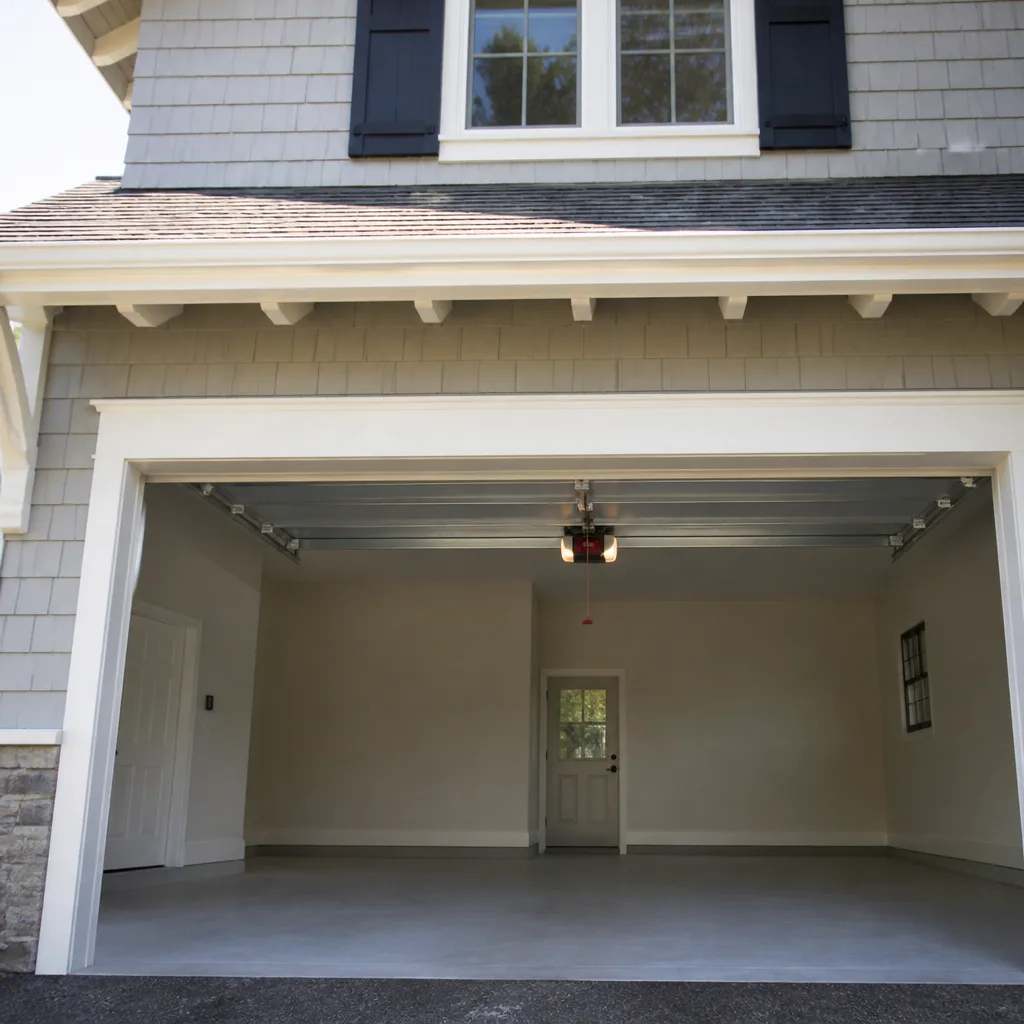 LiftMaster openers
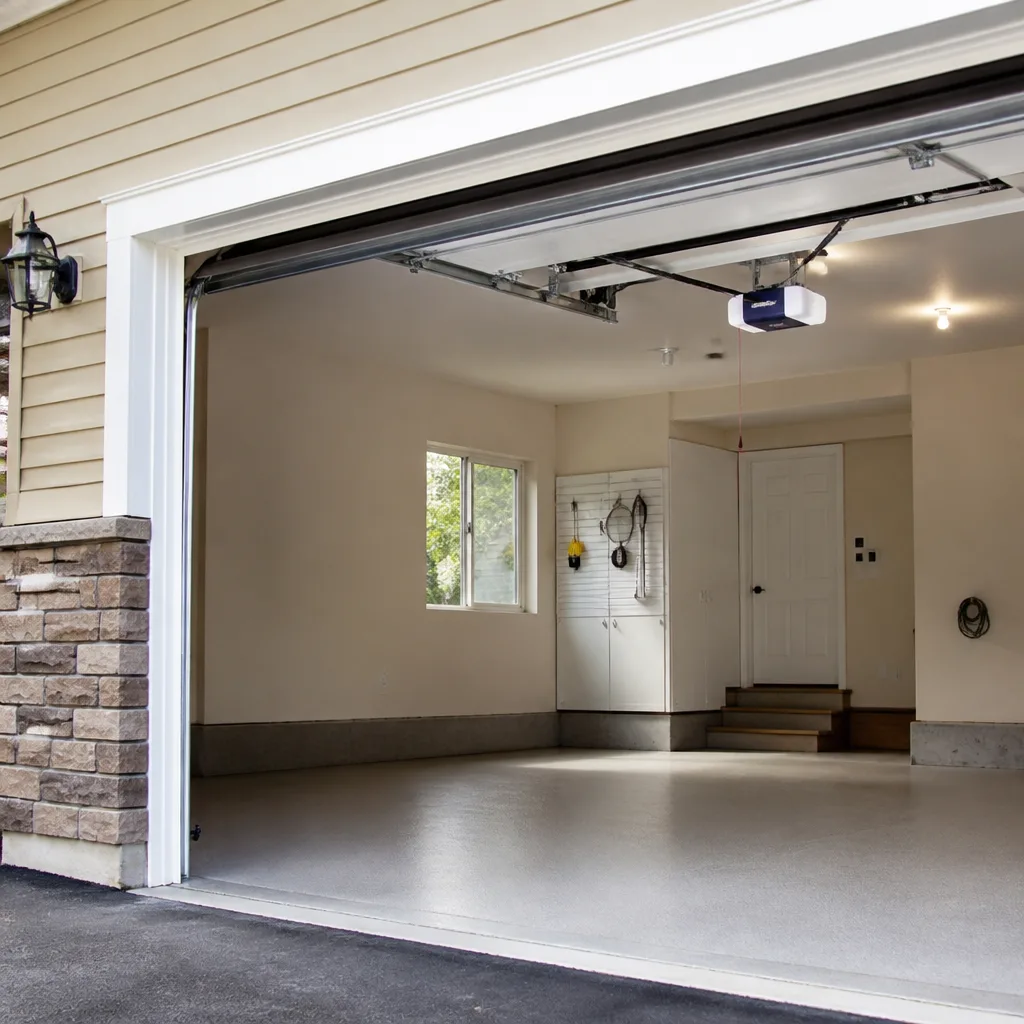 Chamberlain openers
Full 25-point door and opener safety check with every visit - springs, cables, rollers, tracks, and your LiftMaster or Chamberlain opener included
You get a price before we start. It does not change when the pro arrives.
Get your free estimateGarage Door Warning Signs: A Parma Homeowner’s Reference Guide
A garage door doesn’t snap a cable without warning. It warns you first, with a specific sound, a specific slowness, and a specific behavior that most homeowners chalk up to weather or age until the door stops mid-track on a Tuesday morning and the car is stuck on the wrong side of it. That gap between “my door is acting weird” and “my door quit on me” is usually filled with two or three signs somebody noticed and dismissed. This guide maps each warning sign to the component that causes it, so you can tell what’s routine, what’s urgent, and what means stop using the door. We’ll walk through the sounds, the visual clues, and the timing that decides whether you’re booking a repair this week or calling for emergency service today – all from a shop that knows Parma doors.
Quick Answer
The most reliable garage door warning signs are a loud bang followed by a door that won’t lift, grinding or squealing while the door moves, a visible gap in the spring above the door, a frayed or hanging cable on one side, a door that rises crooked, and an opener that reverses or runs longer than it used to. Any one of these signals a worn or failing component. Two or more together mean the door needs attention now, and a snapped cable or a gap in a torsion spring means stop using it and call for professional service.
Styles & brands we work with
- Raised-panel steel
- Carriage house
- Modern flush
- Full-view glass
- LiftMaster openers
- Chamberlain openers
Table of Contents
- What the Sounds Tell You: Grinding, Squealing, Popping, Rattling
- Visual Signs You Can See From the Driveway
- Behavioral Warning Signs: How the Door Moves
- Same-Week Repair, Same-Day Emergency, or Do Not Use
- How Parma’s Wheels and Weather Wear the Door
- How to Document and Describe a Problem Before the Technician Arrives
- What Brand You Have and Why It Matters
What the Sounds Tell You: Grinding, Squealing, Popping, Rattling
The noise a garage door makes is a diagnostic tool if you listen correctly. Each type of sound points at a different component, and matching the sound to the part narrows the problem before anyone opens a toolbox. Here’s how we read the four sounds we hear most.
- Grinding – A low, continuous grind usually means the rollers are dragging in worn tracks or the opener’s gear and sprocket assembly is stripping. On chain-drive openers, grinding while the door sits still points straight at the drive gear inside the motor housing.
- Squealing – A high, steady squeal is friction, not failure. Dry rollers, a dry torsion shaft, or hinges missing lubrication produce it. This is a maintenance sound, but left long enough it hastens wear on the metal parts.
- Popping – A sharp pop, often followed by a door that drops a few inches or won’t lift, is the classic signature of a broken torsion spring. That pop is the sound of wound steel releasing its tension. It’s the one sound on this list you don’t ignore.
- Rattling – Loose hinge bolts, a worn bottom bracket, or a door panel that has started to separate produce rattling. Rattling gets louder over time and often precedes a roller leaving its track.
One more sound deserves its own line: a single loud bang from the garage, like a gunshot, with no obvious cause. That’s almost always a torsion spring letting go. A door with a broken spring should not be operated by hand or by opener, and we’ll explain exactly why below. If you hear the bang and the door won’t open, that’s the moment to call for garage door repair and keep the door closed until someone trained is on site.
Visual Signs You Can See From the Driveway
You don’t need to climb a ladder to catch most visual warning signs. Stand in the driveway with the door closed and look at three things: the spring shaft above the door, the cables on each side, and the rollers where they meet the track. What you see tells you how much time you have.
The gap in the torsion spring
On a door with a torsion spring system, look at the spring assembly mounted on the wall above the door. A healthy spring is one continuous coil. A broken spring shows a clean gap of an inch or more somewhere along the coil, or two coils that have visibly separated. When that gap appears, the door has lost the counterbalance that makes it liftable. Do not try to open it. Do not pull the manual release and lift it by hand. A door on a broken spring can weigh hundreds of pounds, and the remaining spring is still under tension.
Fraying or slack cable
The lift cables run from the bottom corners of the door up along the track. A healthy cable is taut and even. A warning sign is any cable that looks frayed, kinked, flattened in one spot, or hanging loose on one side. Frayed cable means the strands are failing and a snap is possible. A loose cable on one side often goes with a door that’s rising crooked.
Rollers out of the track
Rollers ride inside the track, and each roller should sit centered. A roller that has climbed partway out, or a track that’s visibly bent, pinched, or pulled away from its bracket, is a sign the door is about to bind. A binding door strains the opener and can bend a panel. In our experience in the older Parma neighborhoods, doors on garages that get a lot of sun exposure on one side often show the first track bending on that side.
While you’re looking, check the bottom seal and the bottom bracket. A torn bottom seal lets water into the garage, and a bottom bracket that’s pulled free of the door is a safety concern worth a same-day call.
Behavioral Warning Signs: How the Door Moves
Sound and sight get the attention, but behavior is where most homeowners talk themselves out of a repair. A door that moves oddly is telling you something specific. Map the behavior to the likely cause and the decision gets easier.
Asymmetric movement. If the door rises higher on one side than the other, or the gap at the bottom is wider on one side, the door is out of balance or one side has a cable problem. That asymmetry means the two sides of the door aren’t sharing the load, which strains the tracks and the opener. This one doesn’t fix itself.
Reversal before closing. A door that touches something and reverses is usually a safety sensor issue – a misaligned photo-eye, or a sensor blocked by a spider web, debris, or a small object. That’s often a quick fix. But a door that reverses for no visible reason, with clean sensors, can indicate the opener’s force limit is off or the door is binding on its way down. Don’t assume it’s the sensor until it’s been checked.
Opener running longer than usual. When the motor keeps running after the door has stopped, or you hear the opener cycle longer than it used to, the drive gear or the logic board is wearing. A door that takes noticeably longer to open or close than it did months ago is also telling you the opener is working harder than it should – usually because the door’s balance has drifted.
Stops halfway or won’t stay down. A door that stops partway up, or goes down a few inches and comes right back, has either a force setting problem, a binding track, or a failing spring. If the door feels heavy to lift by hand when released (only test this if your door is already safe and closed), the spring is the suspect.
Same-Week Repair, Same-Day Emergency, or Do Not Use
Sorting warning signs by urgency is the most useful thing this guide can do for you. Not every sign is a call-right-now situation, and treating them all the same either wastes money or risks an injury. Here’s how we’d rank a problem if a Parma homeowner called us to describe it.
Signs that mean Do Not Use the door
- A broken, separated, or gap-visible torsion spring, or a loud bang followed by a door that won’t lift.
- A cut, frayed, or hanging lift cable.
- A door that’s visibly off its track, or a roller out of the track with the door hanging at an angle.
- A door that came down on something and stopped, with a damaged bottom panel or bracket.
Any of those means the door stays closed, or open if it’s already open and safely parked, and you don’t run it. These are the situations where calling for emergency garage door service is the right move, not an afterthought. When a door is stuck open, it leaves the garage unsecured; when it’s stuck closed, it traps a car. Either way, that’s the call to make with the phone instead of a ladder.
Signs that need same-day or same-week repair
- Grinding from the opener while the door is still working normally – the gear is on its way out.
- The door reversing or running long – an opener issue, but a working one worth fixing before it fails.
- One side rising higher than the other, or a door that needs a hand to get going.
- Rattling that has gotten louder, or a visibly worn roller or two.
Signs that can wait for scheduled service
- Squealing or squeaking from the rollers and hinges, with the door operating normally otherwise.
- A torn bottom seal, a scuffed panel, or a door that’s simply due for lubrication.
- Fading paint or a cosmetic dent, where the door still runs true.
How Parma’s Wheels and Weather Wear the Door
Parma has a climate that works on garage doors in a particular way. Winters bring freeze-and-thaw cycles, and every one of those cycles moves moisture in and out of the concrete, the wood, and the metal parts of the door system. Spring and fall bring the temperature swings that push a tired spring and a stiff opener past their limit. In our experience, the calls we get most often in Parma come as the seasons turn – not because the door broke in the cold, but because the cold found the wear the summer had already put there.
What that means for reading your warning signs:
- Cold-morning stiffness – A door that’s stiff on the first cold morning and fine by noon is usually a lubrication issue, not a failure. Greasing the rollers, hinges, and torsion shaft helps. A door that stays sluggish in every temperature is a balance problem.
- Rattling in the cold – Metal shrinks in the cold, so bolts that were snug in summer can rattle in January. Most rattling is a bolt or roller issue, but don’t assume it is until it’s been checked.
- Weather at the bottom seal – The bottom seal takes the worst of the melting snow and road slush that drips off a car. It’s the first thing to expire on a door in a Parma winter, and a torn seal is what lets water pool inside the garage.
- Sun-facing sides – A garage facing south or west into afternoon sun bakes one side of the door and track more than the other. The side that gets the sun is where we usually see the first track bending or a panel starting to bow.
The takeaway isn’t that Parma doors break more often; it’s that a Parma door gives you clear seasonal signals if you watch for them. Check the door at the turn of the season and you’ll catch most problems while they’re still repairable and cheap.
How to Document and Describe a Problem Before the Technician Arrives
You can get a much more accurate diagnosis – and often a tighter price range – by gathering a few facts before you call. The difference between “my door is broken” and “the door won’t lift, the spring above it has a gap in the middle, and I can see the cable on the left is hanging loose” is the difference between a phone call that gets scheduled correctly and one that needs another call.
Here’s how to document what you’ve got, safely:
- Take a test drive, if the door is safe to run. Listen for the sound as the door goes up, watch the gap at the bottom, and don’t put your hand anywhere near the moving door, the tracks, or the spring.
- Photograph, don’t touch. Take wide shots from the driveway, close-ups of the spring assembly above the door, the cables on both sides, the rollers where they meet the track, and the bottom seal. A phone photo taken from the driveway is a genuinely useful diagnostic tool – we can almost always spot a gap or a frayed cable tell from a level, sharp photo.
- Note when it started and what changed. Was it the first cold morning? After a storm? After something bumped the door? The “when” often tells the technician what to look at first.
- Note the door’s behavior precisely. “Rises crooked on the left” or “run cycles one, two, three, then reverses” is more useful than “doesn’t work right.”
- Have the opener’s brand and model handy, or a photo of the info label on the back of the opener head, and the door’s brand if there’s a sticker on the inside face. If you don’t know, don’t worry – most doors and openers have a label tucked out of sight, and the technician will find it.
When you call, lead with the safety issue. If the spring has snapped or a cable is cut, say so in the first sentence – it changes the kind of call the dispatcher makes. You can reach us at (844) 900-3998, and a clear description of a broken spring or a hanging cable will get you the right help faster than a general “my door isn’t working.”
What Brand You Have and Why It Matters
A brand-specific technician is worth more than a generalist when you’re diagnosing a warning sign. A Chamberlain or Genie opener that grinds and runs long behaves in a predictable way to someone who works on those units every week. The same is true on the door side – a Clopay door’s hardware set and a Wayne Dalton or Amarr door’s balance system each fail in their own way.
We work on eight of the most widely installed brands: LiftMaster, Chamberlain, Genie, Clopay, Amarr, Wayne Dalton, Craftsman, and Raynor. That covers the vast majority of driveways in Parma, which matters when a technician can recognize your system before they pull into the driveway – a Chamberlain logic board issue and a LiftMaster drive gear failure don’t chase the same ground, and knowing that up front means fewer return trips. It also means you don’t need a second call if the problem turns out to be the opener instead of the door. We handle garage door opener repair and door work as one job, and the whole diagnosis is done by the same technician in one visit.
Brand familiarity also helps when a warning sign points toward replacement. If a door is beyond repair, knowing the Clopay, Amarr, and Wayne Dalton lines means we can advise on a matched replacement rather than a generic one. Garage door installation is available through us as well, which is the one call you’ll have to make if the diagnosis is “this door is at the end of its life.”
Common Mistakes to Avoid
- Running the door on a broken spring. It seems harmless if the opener still lifts it, but the motor is pulling a dead-weight door and can burn out, bend a panel, or shear a bracket. A door with a visible spring gap should not be run by opener or by hand.
- Pulling the manual release on a door with a broken spring. The release lets the door come down under its own weight. If the spring is gone, that weight is hundreds of pounds and the door can slam.
- Lubricating the tracks. A common mistake in Parma garages is greasing the tracks with the same product used on the hinges. Rollers should ride on dry steel; greasing a track collects dust and causes skidding. Lubricate the hinges, rollers, and torsion shaft instead.
- Adjusting the springs or cables yourself. The cables are under high tension and the spring assembly is under extreme tension. A sudden release of either can cause serious injury, and in our experience it’s the single most common source of emergency calls where the homeowner has already tried. This is not a homeowner repair, no matter how easy it looks online.
- Assuming every weird behavior is the opener. Reversal and running long point to the opener, but crooked movement, stiffness, and grinding can come from the door’s balance or the track. Replace the opener and the door still won’t work if the spring or track is the actual problem.
- Ignoring the warning window. In Parma, the freeze-and-thaw shift is when a door that’s been “a little noisy” goes to stuck. If you’ve had one signal for a few weeks, don’t wait for a second one to book the appointment.
- Buying a new door when a repair would do. Grinding, asymmetry, and rattling are usually repair jobs. Only when the panels, hardware, and opener are all aging together does replacement make financial sense, and that’s a call to make after a diagnosis, not before.
See the difference
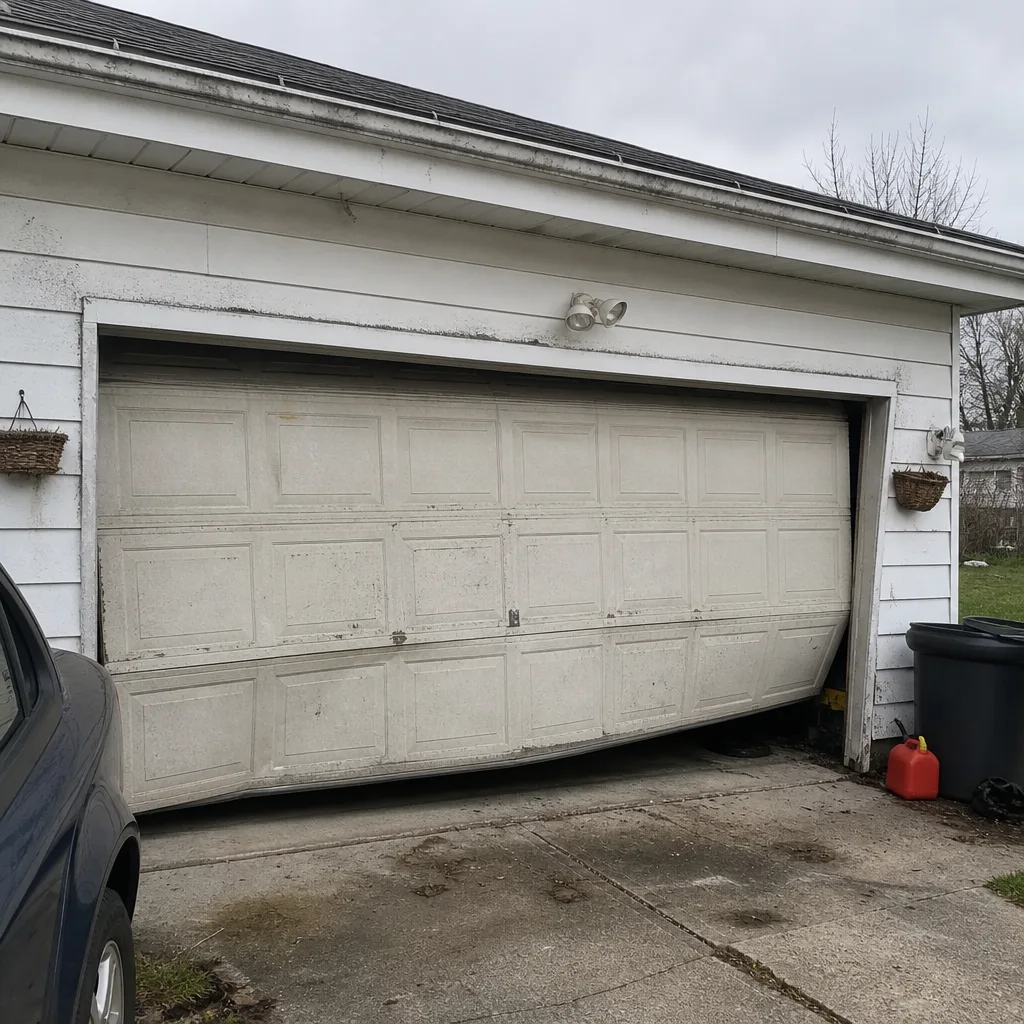 Before
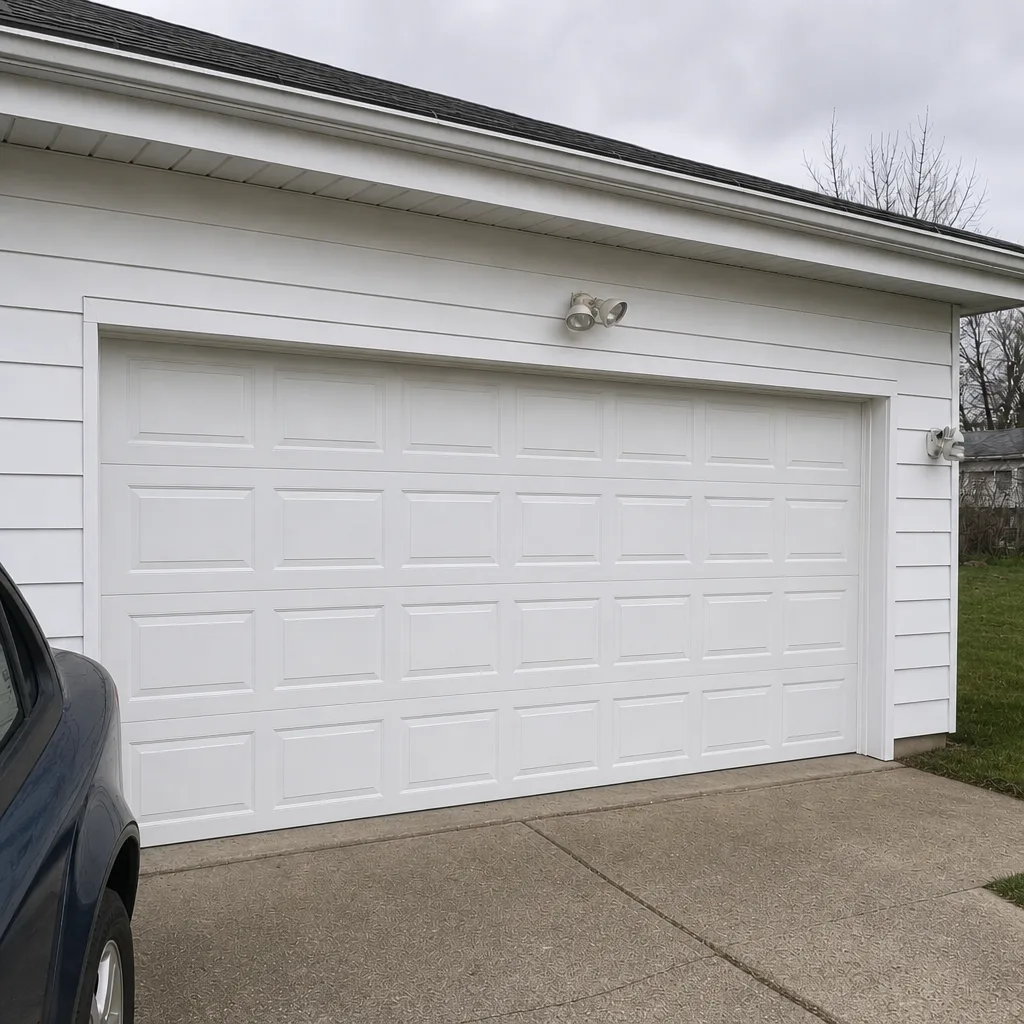 After
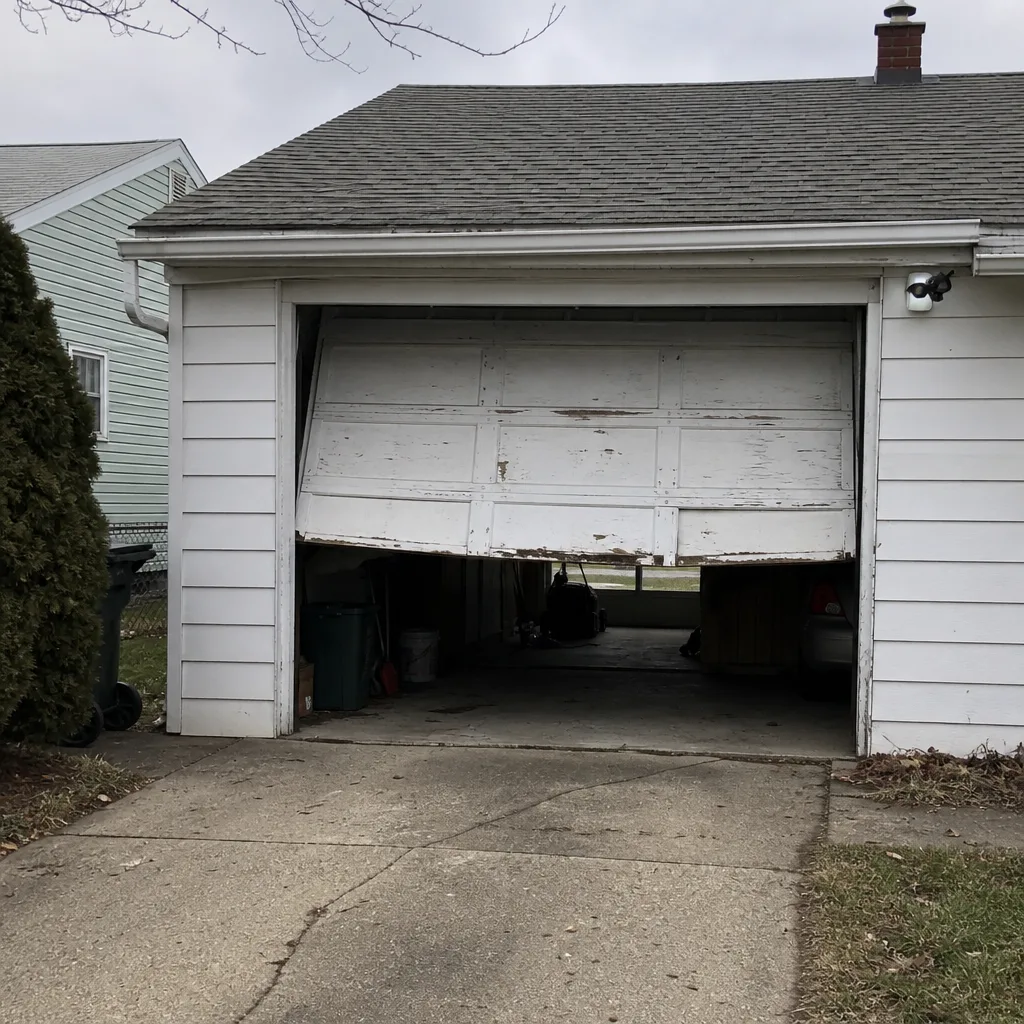 Before
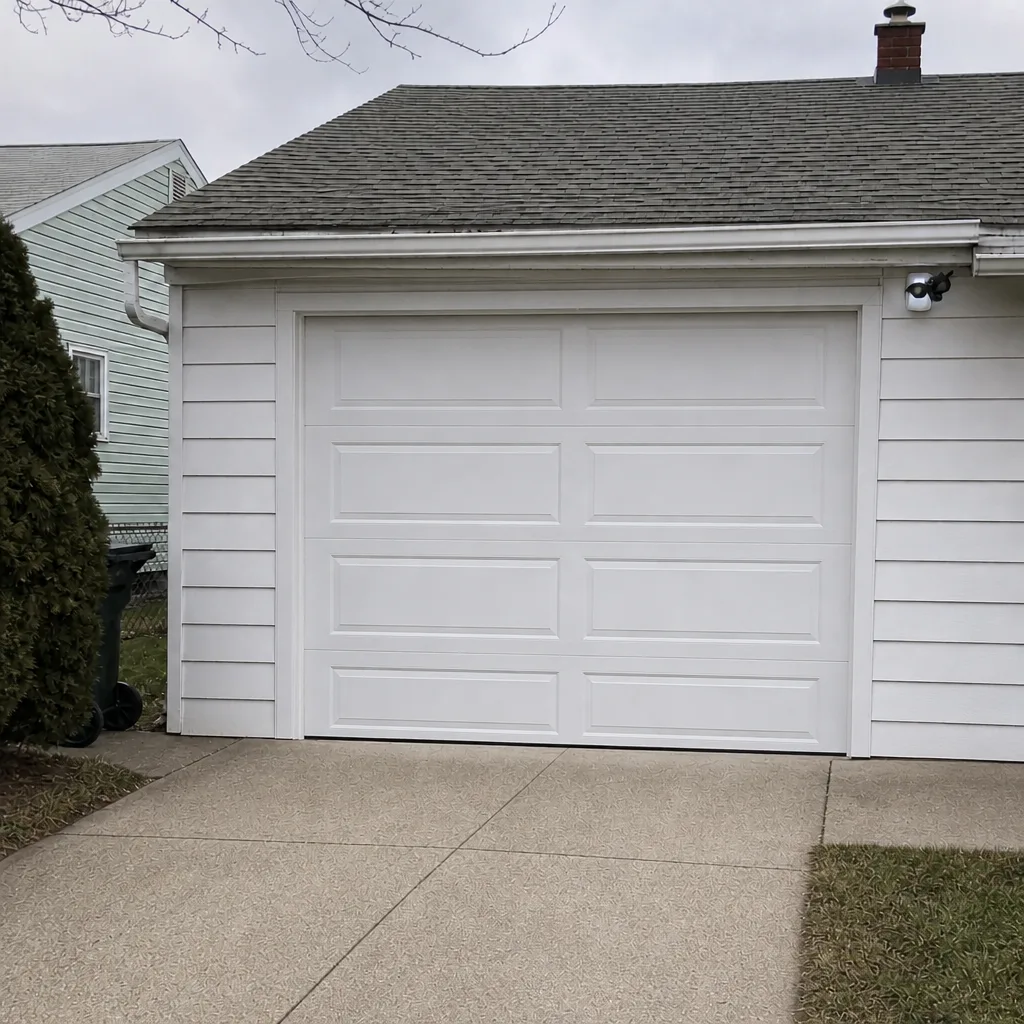 After
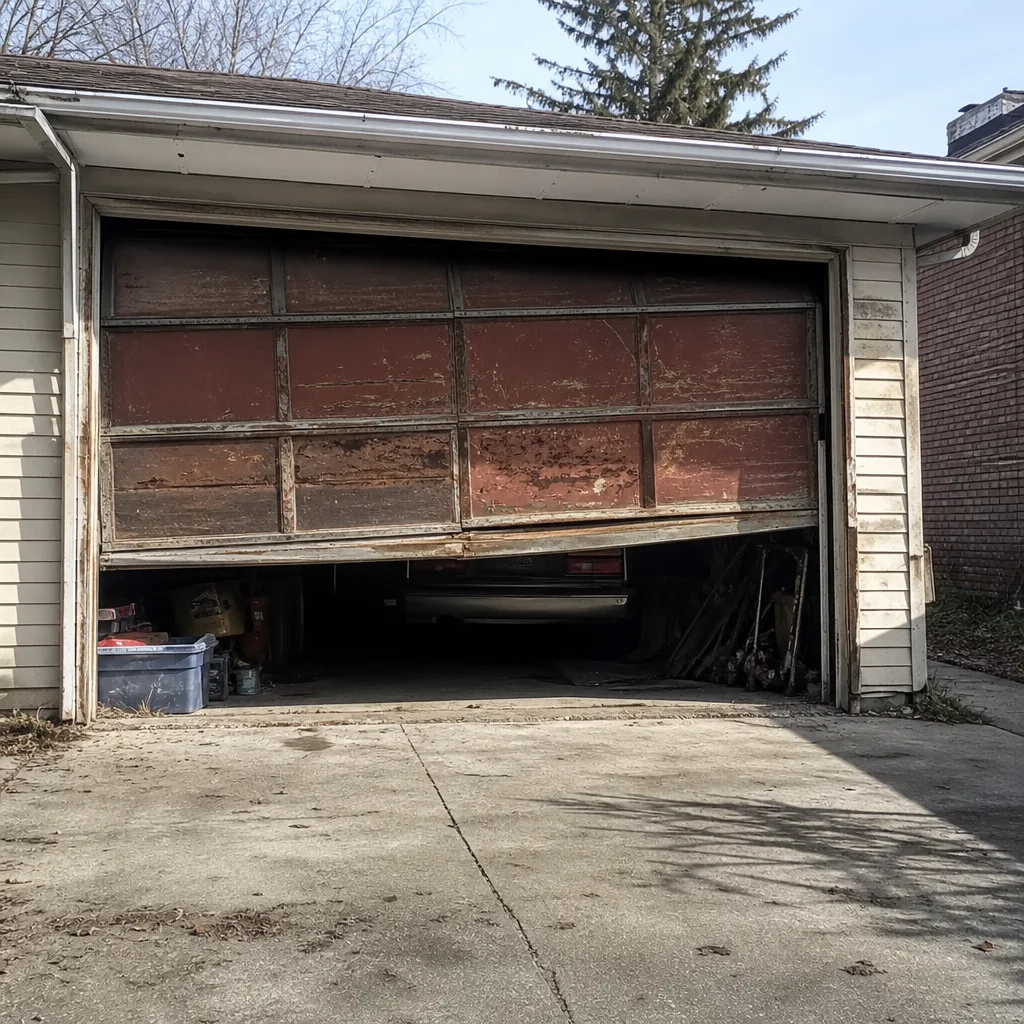 Before
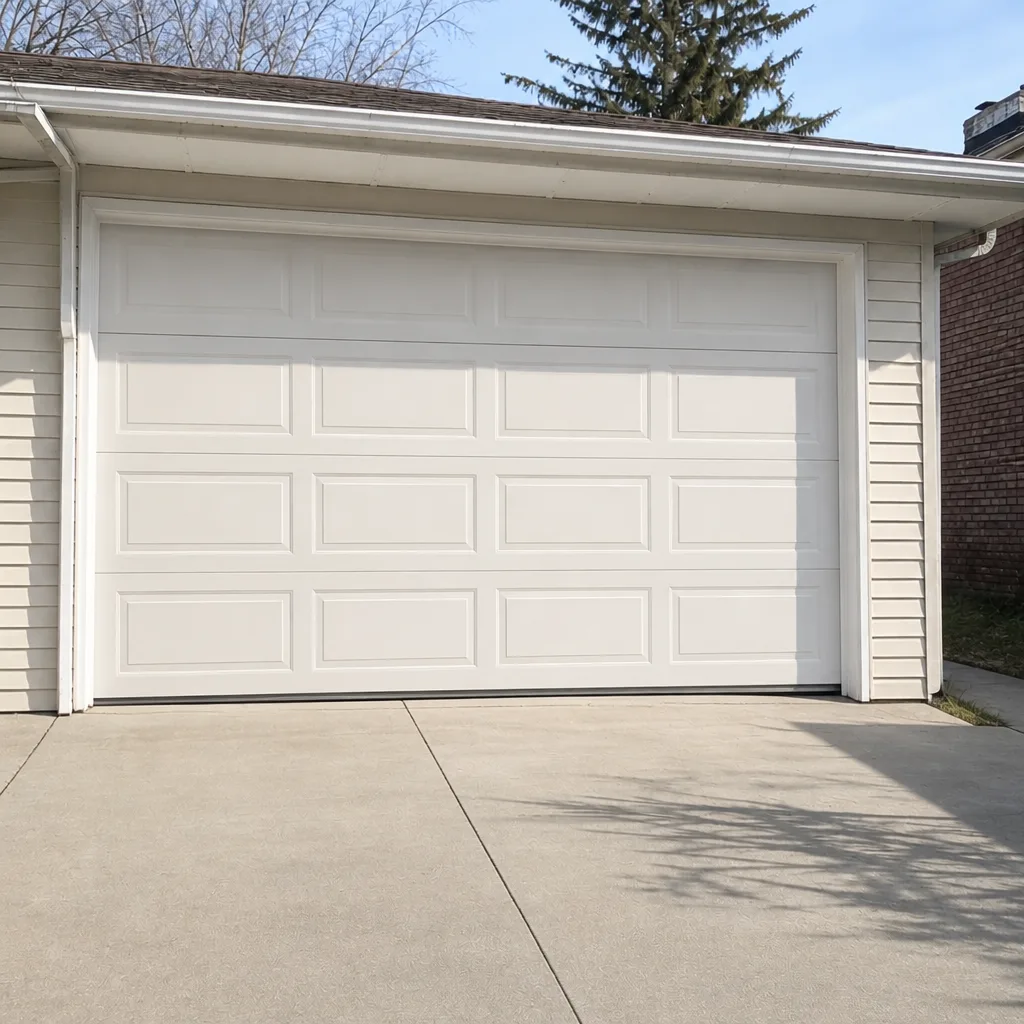 After
When to Call a Professional
If you’ve caught a Do Not Use sign – a spring gap, a loud bang, a cut or hanging cable, a door off its track – call right away. That’s a job for a trained technician, not a weekend project. If you’ve got a door that’s grinding, reversing, running long, or moving crooked, book a repair visit and have it sorted before it turns into an emergency. If the door is simply stiff, noisy, or due for a tune-up, a scheduled visit will catch most problems before they become calls. Parma Garage Door Repair Co offers free estimates in Parma – call (844) 900-3998. We work on the eight major brands, and the technician will know your system before arriving. Our technicians have up to 8 years of experience, and the same team handles spring, opener, panel, or full door – no second call needed.
Frequently Asked Questions
Loud popping or grinding while the door moves, a visible gap in the spring above the door, a frayed or hanging cable, a door that rises crooked, and an opener that reverses or runs longer than it used to top the list. Any one of these means a component is wearing or has failed. If you notice two or more together, book a repair before the door stops moving altogether. Call (844) 900-3998 for a free estimate.
Look at the spring assembly above the door and check for a clean gap of an inch or more in the coil, or a loud bang followed by a door that won’t lift at all. That gap means the counterbalance is gone, and the door should not be run by opener or by hand. The spring is under extreme tension and should only be worked on by a trained technician. Call for service rather than trying to lift the door.
Grinding is not a stop-everything sign by itself, but it’s a “book this soon” sign, not a “wait and see.” The grind usually points to the opener’s drive gear or the rollers dragging in worn tracks, and it gets worse with use. Keep the door operation to a minimum and get it diagnosed before the grinder turns into a door that won’t move.
Squealing, rattling, a stiff cold-weather door, and a torn bottom seal can usually wait for a scheduled visit. Things like a spring gap, a cut or frayed cable, or a door off its track cannot – those are emergency-service situations, because running the door risks injury and can turn a repair into a replacement. If you’re not sure which category your problem falls in, call and describe it.
We work on eight of the most widely installed brands – LiftMaster, Chamberlain, Genie, Clopay, Amarr, Wayne Dalton, Craftsman, and Raynor – which covers the vast majority of Parma driveways. That includes both the opener and the door, so a grinding Chamberlain and a swaying Clopay are the same visit. If you’re not sure what you have, a photo of the door and the opener label is usually enough for us to tell.
Lead with the safety issue, then the specifics: what sound you hear, when it started, and what the door does or doesn’t do. Photograph the spring, cables, rollers, and bottom seal from the driveway, and have the opener and door brand names ready if you can find them. A clear description gets you the right diagnosis and a more accurate estimate on the first call. That’s what Parma Garage Door Repair Co is set up to handle.
The Bottom Line
A garage door almost never fails without warning. It gives you sounds, sights, and behaviors – grinding, a spring gap, a crooked lift – that point at a specific component and a specific urgency. Match the sign to its cause and you’ll know whether to wait, book a repair, or call for emergency service. The one thing you shouldn’t do is dismiss a second signal once you’ve noticed the first. In Parma, the freeze-and-thaw season is when those dismissed warnings turn into stuck doors. Watch the signs, document them, and call (844) 900-3998 for a free estimate when something’s off.
Written by the team at Parma Garage Door Repair Co.